20May
I hung up the phone and stared at the screen a moment longer as if it were to blame for what was about to happen.
For twentytwo years Ive been selling flatssome with overdue mortgages, some still registered to the late owners, some with aging plumbing and, on one occasion, a parrot swearing in three languages. But Id never before had to list a cat as part of the encumbrance.
Okay, lets run through the details again, I muttered to myself, leafing through my notebook. Twobedroom, Baker Street, third floor, sixtytwo square metres. Owner died in January. Heirsa son and a daughter from Bristolwant a quick sale. They wont take the cat, wont put it in a shelter, wont have it put down. Cat stays.
I added a line that would make any solicitor twitch: Cat included in price. Negotiation welcome.
The first viewing was on a Saturday.
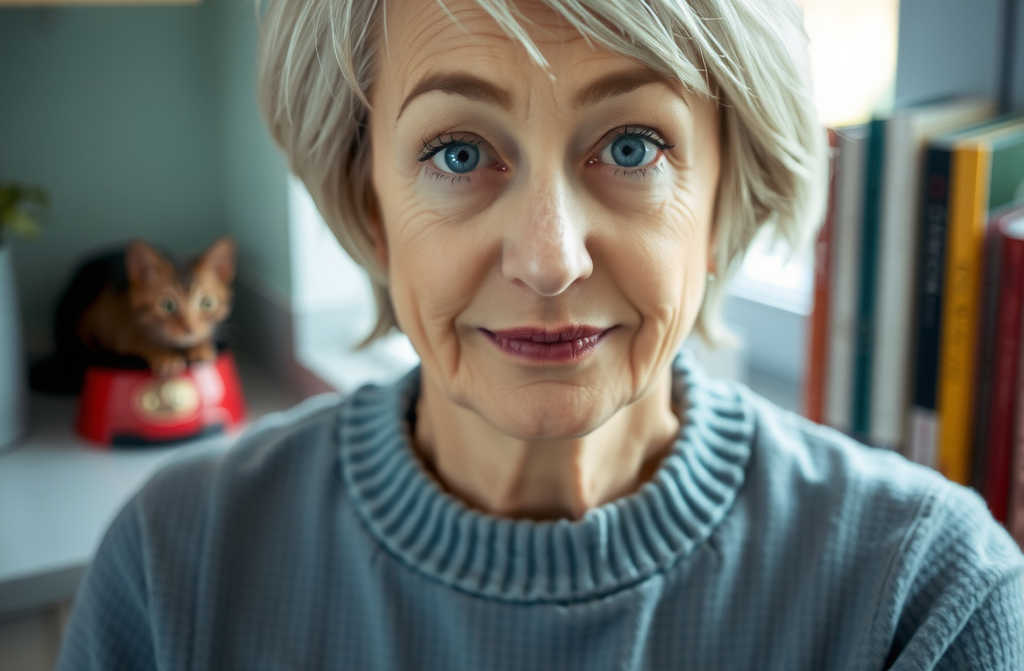
I opened the door for the buyer, a tall woman of about fiftyfive in a grey coat. She crossed the threshold and halted. The flat smelled of the sort of perfume a solitary older man leaves behind: lavender soap, old books, a hint of valerian.
Mrs. Gillian Parker, she announced without offering a hand. She glanced around. And wheres this bonus you mentioned?
The cat was perched on the windowsill of the large rooma massive, gingerwhite beast. He stared at Mrs. Parker unblinking, his eyes holding no fear, no curiosity, only a weary, endless patience.
Thats how you look when youve been abandoned too many times.
Mrs. Parker moved through the flat in silence, trailing her finger over the spines of books on the shelfChekhov, Paustovsky, Astafyevwellworn to the point of fraying covers. She peeked into the kitchen where a tearoff calendar was stuck on the seventeenth of January. On the sill sat three pots of wilted geraniums and a bowlclean, empty, exactly where the left leg of the stool met the floor.
Is anyone feeding him? she asked, not turning around.
The neighbour, I replied. Dorothy Webb from number 36. She pops in twice a day. The heirs pay her a little for it. Not much, but they do.
Mrs. Parker went back to the living room. The cat hadnt movedstill on the sill, front paws tucked, eyes fixed on the courtyard where bare February poplars swayed and a woman with a pram trudged by.
Whats his name?
Marquis, thats what the heirs called him.
Marquis, she repeated, expression unchanged.
The cat didnt lift his head.
She called three days later.
Rebecca, Ive thought it over. The areas good, the tubes close. But the price is still above market, even with the extra. The place needs worknew wallpaper, linoleum. Id take it if you knock off another three hundred pounds.
Ill see what I can do, I said.
The heirs reduced the price by two hundred. Mrs. Parker agreed.
The paperwork stretched over three weeks. She returned twice moreonce with a tape measure, once with a notebookchecking walls, jotting notes, doing the maths. The cat watched. When she crouched at the window the second time to inspect the radiator, he leapt down, padded over a halfmetre and sat beside her.
Hello there, she said.
Marquis flicked his ear once, slowly, then turned away.
Dorothy turned out to be a small, wiry woman with frightened eyes. She met Mrs. Parker at the front door on the day the handover was signed.
Are you the new landlady?
I hope so.
Ill tell you about Marquis. The previous owner, Mrs. Ethel Jones, took him in ten years ago. He was a ragged stray in November, she fed him, gave him a home, and never left her side.
Dorothy lowered her voice.
When she collapsedstroke, right in the kitchenhe was there. The ambulance broke down the door, and he lay at her head, refusing to move.
Mrs. Parker stood in the doorway holding a bundle of three new keystwo for the doors, one for the postbox that now had no one to check it.
Hes harmless, Dorothy continued. He doesnt scratch, he doesnt ruin furniture. He just doesnt come to you. Ive fed him for two months and he never approaches. He eats when Im out, and when I set a bowl down, he darts to the door. I come back, the bowls empty, but he never eats in front of me. Maybe hes waiting, not fearing.
Mrs. Parker moved in on Saturday. She had few belongings; she was used to compact living after twenty years as a cardiac nurse, then a junior doctor, then a redundancy, then a cramped flat in Camden that left her knees and spirit aching. Owning a home had been a dream for nine years, a plan that finally turned into reality.
The movers carried in a sofa, two wardrobes, boxes of dishes. Marquis vanished. Mrs. Parker found him later in the storage cupboard, wedged behind an ironing board, ears flattened, massive and still.
I get it, she whispered to him. Its hard for you. Its hard for me.
She put a bowl back under the left leg of the stool, exactly where the old one had stood, and left the kitchen.
In the morning the bowl was empty.
A month passed. They lived side by sidesame walls, different worlds.
Mrs. Parker rose at six, drank tea in the kitchen, then went on duty at the local practice on Union Streetnot cardiology, but a job after a year of unemployment. Marquis only appeared after the lock clicked. She knew this because she left a long, grey strand of hair across the bowl each evening; when the hair lay on the floor, hed eaten.
In the evenings she settled in an armchair by the window and read the same books that had belonged to EthelChekhov, now covered in pencil notes: exclamation marks, single words like yes, exactly, me too. The marginal scribbles made her feel a strange recognition, as if a woman shed never met was thinking in her own mind.
Marquis waited in the hallway, not in the room, not in the cupboard, but by the front door, precisely at six each evening.
In late March she fell ill. A flu hit her in one nighttemperature thirtynine, sore throat, joints aching. She called in sick, took some paracetamol and lay down. She couldnt get up to eat, nor to feed the cat.
Marquis, she croaked from the bedroom, Im sorry, I cant right now.
Silence.
She drifted into a heavy, buzzing sleep. When she awoke, something pressed on her feet. Not heavy, just a warm, steady weight.
Marquis lay curled at the foot of the bed, eyes unblinking, serious, attentive. For the first time in a month he wasnt in the hallway or the cupboard or behind the iron. He was there, right beside her.
She didnt move, fearing any motion would send him away. Their gazes locked, a silent conversation saying everything without a word.
You already know this, she whispered.
He pressed his ears into his paws, dropped his head onto his legs, and closed his eyes.
He didnt leave.
For three days she was on the mend; for three days he kept his vigil at her feet, only leaving to nibble from his bowl when she forced herself up to refill it. On the third day, when her fever broke and she sat wrapped in a blanket with a mug of broth, Marquis hopped onto the stool, sat beside her and began to purrsoft, hoarse, as if hed forgotten how.
She set her mug down, removed her glasses, extended her hand slowly, palm up.
Marquis sniffed her fingers, nudged his forehead against her palm.
She weptnot from sentimentality, but because a simple, clear truth hit her: she had bought someone elses life, someone elses books, someone elses cat because there wasnt enough of her own. And the cat remained in someone elses life because there was nowhere else for him. Two encumbrances, two addons, two extra beings folded into the price.
And now they sat together in the kitchenhim, fifteen cat years old, and her, fiftysix human years, sharing the same warmth.
He purred, she rested her hand on his heavy head and realised this might be what they call unexpected graceyou dont look for it, you dont ask for it, yet it arrives.
By May she stripped the old brownflorated wallpaper, painted the walls a warm cream, left the linoleum in place because the cash wasnt there for everything yet, and suddenly the flat didnt feel foreign. She didnt notice the exact moment it shifted.
Ethels books stayed on the shelf; she added a handful of her ownabout a dozen. Chekhov with his marginal notes stayed in its spot; she sometimes opened it at night, reading not the story but the side notes, nodding at the familiar yes, exactly, me too.
She threw away the dead geraniums, and only after moving in planted fresh ones on the same sill where Marquis had first watched her. He now lounged there less often, preferring the armchair beside her or her lap when the evening stretched long and the book was good. He stopped waiting at the door at six.
In June I, Rebecca Clarke, bumped into her at the local Tesco on Baker Street. She stood in the queue with a bag of cat food and a bottle of kefir.
Hows the flat? I asked. Happy?
No regrets, she replied.
And the cat?
She paused, shifting the food from one hand to the other.
You know, Rebecca, she said, they cut the price too much. Should have kept it higher.
I laughed. She didnt.
When she opened her front door later, Marquis was waiting by the shoes, his new favourite spot. The lock clicked, he lifted his head, blinked slowly once.
Thats how you greet someone youve been waiting for.
Lesson learned: the things we think are merely addons may become the very reasons we stay, and the waiting can turn into belonging.