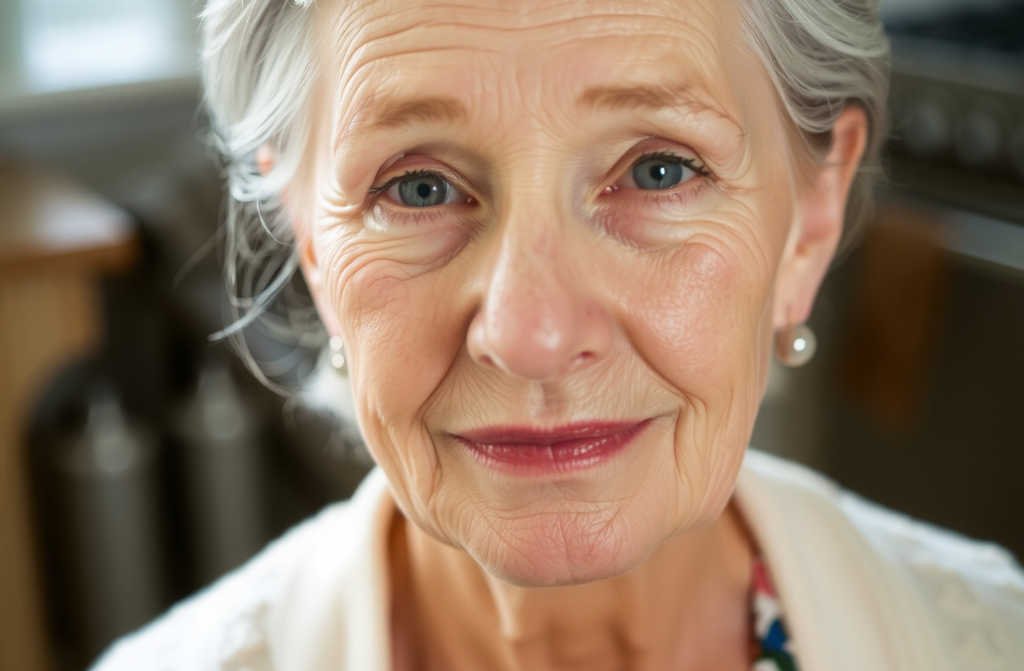
Eleanor Whitaker shuffled out of the chemist, her mind set on one simple goal make it home without any further mishaps.
Stick. Step. Stick. Step. Her leg ached, the bag of tablets digging into her palm. October this year was nasty damp, chilly, with no hint of kindness.
Just a quartermile more. A little longer.
She was almost past the childrens playground when a faint whimper drifted from the hedges by the fence.
Eleanor stopped, stood for a beat, thought: Ive no strength left, just go home. Yet she turned back anyway.
She pushed aside the branches.
In the shrubbery lay a shepherddog, large and adult, utterly helpless. Its front paw was both raw and dried, the fur peeled away, ribs showing starkly beneath. The worst part were its eyes alive, but on the verge of surrender. Eleanor had seen those eyes before; she knew exactly what they meant.
The dog stared at her without growling.
Just stared.
What am I meant to do with you? Eleanor muttered, more of a sigh than a question.
She fished out her mobile and dialed a cab the first one shed called in months, trying to save a few quid. She gave the address of the veterinary surgery on Willow Street.
The driver grimaced when he saw the dog.
Usually we dont transport animals. Only if you stuff them in the boot. Wont it make a mess? he asked.
It wont, just help me load it, Eleanor replied in a tone she used once with reluctant healthcare workers.
Surprisingly, the driver didnt argue he lifted the dog himself and slid it into the boot.
At the surgery the vet diagnosed a fracture, a torn wound and severe exhaustion. An operation was urgent.
They quoted a price.
Eleanor fell silent for a moment, then opened her wallet.
It was almost her entire state pension.
Almost everything but not quite everything, she whispered to herself, and laid the cash on the counter.
She trudged home late that evening, the limp dog in tow, the bag of medicines and a twopage instruction sheet in tiny print.
The dog flopped onto the hallway floor the instant they stepped inside. Eleanor sat beside it.
Molly the shepherd lay stretched, the bandaged paw extended, paying Eleanor absolutely no mind.
Fine then, Eleanor said. If you dont want it, I wont stare. The important thing is youre alive.
That night she hardly slept, listening for any signs of distress. She rose twice, went to the kitchen, and shone a flashlight over the dog.
The next morning Emily called.
Hey Mum, how are you?
Fine. Ive taken in a dog, Eleanor replied.
Silence stretched.
What kind of dog?
A shepherd. Was wounded, lying in the hedges. Ive taken her to the vet.
Mum, Emilys voice took on that strained, restrained tone she uses when shes trying not to shout. Mum, are you serious?! You can barely walk! What money are you using?!
My own.
My pension?!
Emily, please dont yell.
Im not yelling, Im just speaking. We talked about this Im sorting my room, youre supposed to move in soon, and youre still
Emily. Eleanor said calmly. Ill call you back later.
She hung up.
Later that day the conversation faded; something else took precedence.
The first few days were rough. Molly wouldnt eat. Eleanor tried everything: pâté, boiled chicken, rice broth. She set a bowl down, stepped away, waited. When she returned, the bowl was untouched.
She sat on the floor beside it, slowly, creaking, and held a morsel out with her hand. She just waited, hoping not to frighten the animal.
On the third day Molly nudged forward and took a tiny piece of chicken.
Almost invisible.
Eleanor didnt grin; she simply stayed still, not wanting to scare her off.
And thats how it went.
She named her Molly after a moment of indecision first she wondered if a name was even necessary, fearing the dog might not stay. Then she realized she would, eventually.
Molly was terrified of everything: sudden noises, unfamiliar movements. When Eleanor first tried to pat her head, Molly curled up as if bracing for a blow.
Who would do that to you?
Eleanor didnt force a pat she just rested her hand near the blanket, beside the paw. The hand lay there, no pressure. Let her get used to it.
Days slipped by like that.
Morning and evening they ventured outside.
Molly descended the stairs carefully on three legs, keeping the fourth hidden. Eleanor, too, took it slow, gripping the railings. Two wooden legs, she thought. A matching pair, really.
Theyd reach the bench beneath the lone oak and pause. Eleanor would sit; Molly stood nearby, scanning the surroundings with a wary, tense stare, as if expecting danger from every direction.
That became their routine: a walk to the bench and back, then a little farther each day around the corner, then the whole yard. Eleanor returned home feeling her legs buzz, but differently than before. Not from weakness, but from fatigue. There was a change.
In November Emily turned up unannounced.
She knocked, stepped inside, and halted in the hallway. She saw Molly curled on a rug, bowls against the wall, a leash on a hook. Then she spotted Eleanor, cupping tea in the kitchen, cheeks flushed from the walk.
Mum, you look okay, Emily said, bewildered as if expecting something else.
Im out twice a day, Eleanor replied. Sit, Ill pour you a cup.
Emily sat, stared at Molly, who simply lifted her head.
She bite?
No.
What if a stranger comes in?
Shes not aggressive, just cautious.
Emily fell silent, then spoke again.
Mum, the rooms ready. Ive done everything. Its easier for me when youre nearby. And if youre alone here you never know.
Eleanor set the cup down.
Will you take the dog?
Mum
Emily, just answer.
A long pause.
Our flat isnt that big, and Kostas hates pets. You know that.
I know, Eleanor said.
The topic was shelved for the night.
Molly, as if sensing something, rose from her rug, padded to the kitchen, and lay at Eleanors feet on the cold floor, stretching out.
Eleanor lowered her hand and scratched behind Mollys ear.
Everythings clear, isnt it?
The conversation resurfaced in December when Emily arrived on Saturday, luggage in tow, a look of someone whod made a decision and was ready to state it.
She stocked the fridge, washed dishes, then sat at the table, hands clasped in that serioustalk pose.
Mum, lets not be mad at each other.
Eleanor sat opposite, and Molly breathed heavily in the next room.
Alright, Eleanor said.
Ive arranged everything. New curtains, a new mattress for you. Youll be close, Ill be at ease. You wont be alone.
Im not alone.
Mom. Emilys eyes softened. A dog isnt just company. Its a responsibility you dont need right now. Youre spending your pension, braving the cold twice a day, you
I look better than I did a year ago.
You get tired.
We all do.
Mom, Ive found a good shelter. They have proper grounds, plenty of people who love dogs. Molly would be better off there than in a onebed flat.
Molly let out a sigh, padded into the kitchen, halted at the doorway, glanced at both women, then hopped onto Eleanors lap.
Emily watched the dog, then her mother.
I hear you, Eleanor whispered. I hear everything.
She rested her hand on Mollys head. The dog didnt stir.
Do you remember my old job? Eleanor asked suddenly. You were little then, maybe you recall. Id leave at six in the morning, come back while you were still asleep. Your father used to say you didnt exist at home, only at the hospital.
Emily was silent.
I never resented it. I knew those people needed help more than I did. Then Dad died, I retired, and suddenly I was unnecessary. Youre an adult now, your life is your own. Thats fine. But I Emily, I simply didnt know what to do with myself.
Outside, Decembers grey twilight fell, streetlights flickering on.
When I found Molly, I thought another problem added to my list. No strength, no money, health failing. Why bother? Then on the third day she took a tiny piece of chicken from my hand. That little bite made me realise I wasnt losing sleep because I was tired, but because it mattered. If I didnt look after her, who would?
Molly nudged closer; Eleanor scratched her ear again.
Ive started walking again. First to the bench, then gasping. Now I do three circles around the house without noticing. I cut my bloodpressure meds a fortnight ago; the doctor said it was okay. Ive met Valentina from the flat above, we sometimes stroll together. I finally bought decent winter boots first time in three years, because I used to think, Why bother? I dont go anywhere.
She turned to her daughter.
And now Im out, Emily.
Emily stared at her mother, wanting to say something but holding back.
I understand youre scared, Eleanor said. That I might fall, that there may be no ambulance, that winter roads are slick, that Im alone. Ive felt that fear for years, especially after Dad.
Is that a problem? Emily asked softly.
No problem at all. Im just not ready to be completely helpless yet, Eleanor replied with a faint smile. Its early.
Emily lowered her gaze.
Silence lingered.
You wont give her away? Emily asked.
Or move her?
Emily nodded slowly, as if a piece of the puzzle finally clicked.
Then I want you to have an emergency bracelet. Press it and Ill get a call straight away.
Alright.
And Ill visit once a week. Not to check up, just to see you.
Id like that.
She looked at Molly, then at Emily.
Come here, Eleanor said.
Emily rose, stepped forward. Eleanor wrapped her arms around her tightly; Emily held on for a beat before returning the hug.
Molly shuffled back to her rug.
Outside, night had deepened. Lamps glowed evenly, snow dusted the windowsill.
Winter slipped by unnoticed.
Eleanor never realized when December gave way to January, then February, but she kept walking mornings and evenings, in frost and thaw, in sleet and snow.
Molly trotted beside her, now fully healed; the vet declared the leg indistinguishable from the rest.
The neighbours knew them. Valentina from the flat above always set off at the same time; they walked and chatted about children, health, and, cautiously, politics. Old Mr. Jenkins from the third floor stopped by each time to offer Molly a biscuit, which she accepted with dignified poise. Children from the playground first eyed the shepherd warily, then, after a few days, ran up to pet her.
Eleanor left her walking stick in the hall in February, forgetting it one morning. When she returned, it was propped by the door, and she laughed, Well, there it is.
In March she rang the council to ask if the country lane to the cottage was open. It was, so she booked a spot on the local bus.
Molly sat on the rear platform, her nose pressed to the window.
The cottage was the same old stone house, autumn leaves from the previous year, bare apple trees. Eleanor strolled the garden, hand on the soil still cold, but no longer frozen. She marked spots for foxgloves, petunias, dill and parsley, just for the scent.
Molly bounded around like a youngster.
In April Emily arrived with Kostas. Kostas stepped inside, saw Molly, tensed. Molly sniffed his hand, then backed away, as if checking he wasnt a threat.
Kostas let out a breath.
Okay, he said carefully, shes calm enough.
Shes clever, Eleanor added.
Over tea, Emily studied her mother, then whispered while Kostas went onto the balcony:
Mum, youve changed.
Improved?
Yes.
Eleanor thought for a moment.
Im just living again, she said. Thats what it feels like.
Molly rested her head on Eleanors knees.
And so the little English town kept its rhythm, a pensioner, a rescued shepherd, a daughter, and a reluctant soninlaw, each finding a way to share the load, the laughs and the occasional sigh.