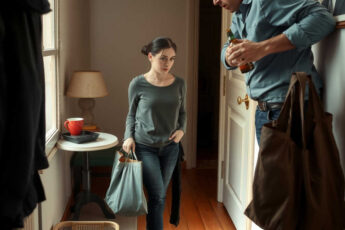
Looking back through the years, the memory of that evening still lingers in my mind like a distant echo from another lifetime. „What’s wrong with you this time?! How much longer can this go on?! I’m completely fed up with it all!” The woman’s voice carried from behind the door of one apartment, filling the entire stairwell of the old block with its sharp edge.
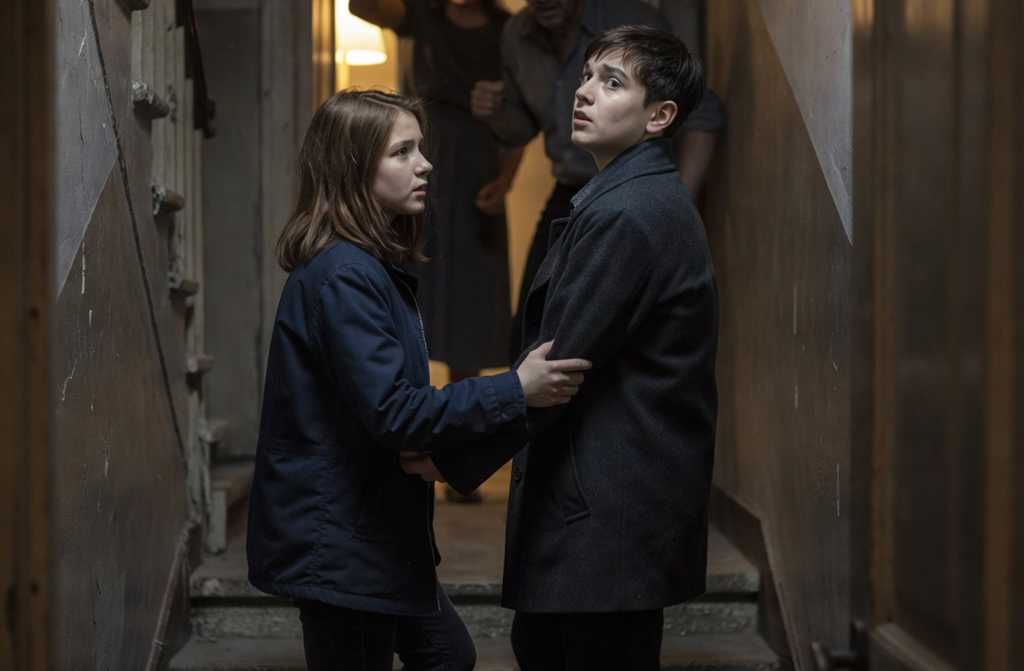
At that moment, Zuzanna and Mateusz were making their way up the stairs in their Warsaw neighborhood. They halted abruptly, as though an invisible barrier had risen right in front of them. Their eyes met for a brief instant, and no words were needed in that fleeting glance. Both understood without a sound that leaving was the wiser choice right then. Letting out a shared sigh, they turned around quietly and headed away from the building. Returning to their own apartment that evening was clearly not in their plans.
Who would want to spend the night listening to endless parental arguments? Certainly not these two. The siblings walked steadily toward the neighboring entrance where their grandmother Jadwiga lived. In recent times her place had become a true haven for them. While they used to visit only on weekends before, now they found shelter there nearly every night.
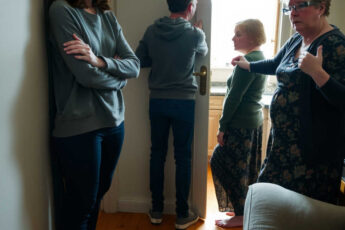
The atmosphere back at their parents’ home had grown utterly unbearable long ago. Their mother and father seemed to forget everything else as they shouted at each other without pause. Worst of all, they were pulling the children into these disputes more and more often.
One moment their mother would turn sharply to her daughter and demand an answer: „Tell me, am I right? You agree with me, don’t you?”
The next, their father would address his son without waiting: „No, I’m the one who’s correct here! Back me up!”
Zuzanna and Mateusz stayed silent. They had no desire to pick sides or become entangled in this endless clash. All they wanted was quiet, peace, and warmththe very things they found at their grandmother’s.
Such scenes repeated day after day, like a worn-out melody no one dared to stop. The children had learned to read the subtle signs that trouble was brewing. A certain tone in the voices, a sudden sharpness in movements, the way their parents glanced at each otherthese became signals to slip away. What child would enjoy living in constant tension, where any conversation could erupt into a loud quarrel in seconds?
The siblings struggled to understand what had triggered this family breakdown. Their household had never been perfect like something from an advertisement, yet earlier their parents knew how to reach agreements. Arguments happened, of courselife brings thembut they usually ended in calm talks rather than shouting. Their mother might frown, their father raise his voice slightly, but within half an hour matters were settled. Everyone would sit at the table again, share tea, and discuss weekend plans.
About two years earlier everything shifted. It was as if someone had quietly replaced their old parents with different ones who found reasons to argue over the smallest things. A dirty mug left on the table? A long lecture on carelessness and disrespect. A shirt hung on the wrong hook? Cause for sarcastic comments about household order. A teaspoon forgotten in the sink? Almost a serious offense warranting minutes of discussion.
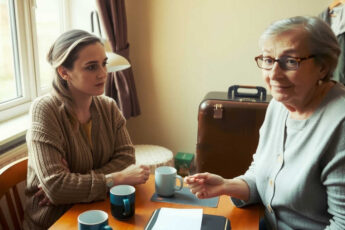
One evening Zuzanna sat in her grandmother’s kitchen, stirring her tea without much thought. She stayed quiet for a while, watching the amber swirls in the cup, then asked with bitterness, „How did it come to this, Grandma? Everything changed after their joint trip. What happened there?”
Jadwiga paused, set her cup on the saucer, and gently touched Zuzanna’s hand. She too could only guess at the reasons for the family rift, and those guesses brought her no joy.
„Adults will sort it out themselves,” she replied softly, keeping her voice steady. „Sometimes people need time to figure out the best way forward.”
Zuzanna nodded, though doubt showed in her eyes. She sensed her grandmother was holding something back but chose not to press further. What was the point? As long as they were seen as children, nothing important would be shared.
„We can’t stand the shouting anymore!” Mateusz burst out in frustration. „We can’t focus on homework or read a book in peace! I can’t even remember the last time we all sat together at the table. If living together is so hard for them, they should separateand things would be easier for everyone!”
The words came out on their own, yet they held the truth of recent months. Mateusz spoke not just for himself but knew his sister felt the same. Their home had lacked quiet for ages: either their mother would snap at something or their father would reply irritably, and soon another argument would start with no escape.
„Mateusz…” Jadwiga looked unsettled. She set aside her knitting, studied her grandson carefully, and shook her head slowly. „Have you thought about what would happen if they separated? You two would have to be divided. Are you ready to live apart from Zuzanna?”
„We’ll live with you!” Zuzanna said at once, gazing at her grandmother with pleading eyes. „We’re already here almost all the time anyway! You wouldn’t mind, would you?”
Jadwiga remained still. She understood her grandchildren’s feelingssaw how worn they were from the constant parental fights. On one hand, the children would be safe with her in a calm setting where homework could be done without noise, books read in peace, and protection felt. She loved them deeply and was ready to offer care.
On the other hand, what about their parents? How to explain that the children no longer wished to stay at home? Would they accept such an arrangement? And if they did, how might it affect their bond with the children? Could this step lead to a complete break instead?
„Let’s not rush,” she said with a deep breath. „I’m always happy to have you here, and you know that. But first let’s try speaking with your mother and father. Perhaps together we can find a way to fix things.”
„Don’t worry, we’ll talk to them ourselves,” Zuzanna stated confidently, smiling brightly. Their grandmother was nearly on board, and that mattered most. „Just don’t turn us down, please! We really can’t stay there any longer! It would be better for them apartotherwise they might actually hurt each other one day! I saw Dad raise his hand toward Mom yesterday… He didn’t hit her, honestly! But he was close.”
Zuzanna fell quiet, recalling that frightening moment. She had entered the kitchen for water and frozen in the doorway: her father stood half-turned toward her mother, his arm suddenly lifting, while her mother instinctively ducked. Seconds later he lowered it, but that instant stretched into eternity for her.
„Grandma, say yes!” Mateusz supported his sister. He stepped closer and took her hand, as if fearing refusal. „We’ll help you with everything around the house. Just don’t send us back there. They barely notice us at all! Yesterday I went to Dad about a parent-teacher meeting. Do you know what he said? 'Go ask your mother!’ So I did. Guess what she told me?”
„Go ask your father?” Jadwiga asked quietly, already knowing.
„Exactly!” Mateusz gave a bitter laugh. „Then they argued for two more hours over who should attend. They sat in separate rooms yelling across the hallway while I just stood there listening.”
„I asked them to sign a permission slip for a museum trip,” Zuzanna added, lowering her gaze as her fingers fidgeted with her sleeve edge. „Now I’m the only one in class who won’t go. Neither signed the form. Instead they started arguing againMom shouted it was Dad’s duty, and Dad insisted Mom should handle school matters.”
Jadwiga watched her grandchildren and saw their deep exhaustion. Their eyes showed a weariness beyond childhoodone built up over months where each day mirrored the last, where family warmth gave way to constant arguments and support to indifference.
„It’s always like this,” Mateusz sighed, shoulders slumping. His voice carried fatigue, as though he had repeated it countless times. „Any request from us turns into a new fight. We don’t even want to go home anymore. A couple of days ago we arrived at eleven at nightand did they scold us? No! They just sent us to bed without asking where we’d been. Later they blamed each other for poor parenting for a long time.”
The teenagers sighed in unison once more. In recent months they had seriously considered their parents’ divorce as the only escape. Yet the thought of being separated from each other, which would surely follow, frightened them. One would stay with their mother, the other with their father, turning their close bond into occasional weekend visits.
They weighed options, whispering about them in the evenings when alone in their room. Once Mateusz jokingly suggested running awayjust grabbing backpacks and heading wherever. He said it with a smile to ease the tension, but Zuzanna took the idea seriously. Her eyes lit up briefly before she whispered, „What if we really left? Even for a few days…” In that moment both realized the family situation had grown so unbearable that even fleeing seemed plausible.
Then the idea struck them: their grandmother! Why not move in with her? The thought came to both at once, as if their minds worked together. Zuzanna voiced it first: „What if we ask Grandma to let us live with her? She won’t argue or shout. We won’t have to hear those endless fights…” Mateusz added right away: „Yes! She’s kind and always supports us. Her apartment is big enough for all of us.”
They began imagining a new life: peaceful breakfasts, quiet space for homework, evenings playing board games with their grandmother. No shouting, no accusations, no need to hide in their room to avoid getting caught in the heat of the moment. For the first time in ages, hope flickered in their hearts. Let their parents sort their own issuesthe siblings would finally find peace, they thought while picturing life at their grandmother’s.
***
„Mom, Dad, we need to talk seriously,” the twins said firmly, standing before their parents. They had waited for an evening when both were home and entered the living room with resolve. Zuzanna held tightly to Mateusz’s handit helped her stay steady. „But first promise to hear us out completely before giving your opinions.”
Michał looked up from his phone in surprise. Agnieszka, who had been arranging items on the sofa, straightened suddenly. Their faces showed disbelief at what the children had just said.
„This is all your doing!” she huffed, crossing her arms. „The children are already setting conditions for us! As if we have to answer to them!”
„Who are you to talk!” the man flared up immediately, setting his phone aside. „I’m always at work trying to provide for the family. You’ve been with them all the time! And what have you taught them? Why are they giving orders now?”
The twins exchanged looks. They had expected something like thisthe talk sliding into the usual pattern of mutual blame. But there was no turning back.
„Enough!” Zuzanna exclaimed, her voice nearly breaking. She stepped forward, trying to speak clearly and calmly even as everything inside trembled. „Mateusz and I have thought about it and decided you two need to divorce.”
Silence fell over the room instantly. Agnieszka froze with her mouth slightly open, while Michał rose slowly from the sofa.
„Now that’s news!” their mother’s voice turned threatening. „Zuzanna, you’re still too young to tell adults how to live! And what else have you 'decided’? Maybe you’ll divide the apartment for us too?”
„If you don’t divorce, we’ll contact the child protection services,” Mateusz said, gripping his sister’s hand for strength. His voice sounded firm, though he himself wasn’t fully sure he meant it. „And then, Dad, you could lose your job. Your company doesn’t tolerate scandals, right? You’ve said yourself that reputation is everything.”
„And you, Mom,” Zuzanna continued, looking straight at her mother, „the neighbors will stop respecting you. They won’t even speak to you! Everyone knows how you two shout at each other, and we’ll add details!”
„They’re threatening us! Just look at them!” Agnieszka finally managed, glancing from one child to the other. „These are our children! How can you treat us this way?”
„We’re not threatening,” Mateusz said quietly but steadily. „We just want you to understand: living like this isn’t possible. We’re exhausted! Tired of the shouting, of you not hearing us, of even simple requests turning into fights.”
„You’ll divorce, move apart, and we’ll live with Grandma,” the children finished together, as they had rehearsed. „It’ll be better for everyone: peace for us, fewer conflicts for you. We don’t want to be caught between you anymore.”
Their parents stood frozen. For the first time in a long while, they had no reply. Usually in such talks they would start arguing right away, interrupting each other and assigning blamebut now both seemed struck speechless.
Their thirteen-year-old children were acting in a completely unexpected way! Zuzanna and Mateusz stood side by side, holding hands, and faced their parents with steady eyes, without their usual shyness. They spoke of serious matters the adults themselves had tried to avoid thinking about.
The couple had considered divorce themselves more than once. But one question always stopped them: who would the children stay with? Separating the twins seemed unthinkablethey were so close, always doing everything together and supporting each other. The parents couldn’t imagine splitting them, forcing them into different homes and limiting visits to weekends.
The option of their grandmother’s place had never occurred to them before. Somehow the idea had never crossed their mindsperhaps because both were too wrapped up in their own grievances and complaints. But now, hearing the children’s proposal, Michał and Agnieszka couldn’t help wondering: what if this was the solution? Their grandmother loved the grandchildren, her apartment was spacious, and she was always glad to see them… Maybe it would resolve at least part of the problems.
„I’ll call my mother,” Michał finally said through clenched teeth. His voice came out muffled, as if the words were hard to form. „If she agrees…”
He didn’t finish. Agnieszka cut in sharply, and her voice held a weariness that surprised even her:
„Then we’ll finally stop tormenting each other. Call her. I’ll be happy not to see your face every day.”
Her words hung in the air. She hadn’t meant to sound so harsh, but years of built-up hurts and disappointments made them spill out.
„And I’ll be just as glad!” Michał replied, trying to mask the pain her words caused with a touch of irony.
There was no anger in his toneonly a bitter smile at what their family life had become. He took out his phone and slowly dialed his mother’s number. As the rings sounded, both spouses looked in different directions, avoiding each other’s eyes. They didn’t yet know where this talk would lead, but they sensed a point of no return might already have been crossed.
***
That day the Kowalski family reached a turning point. It all started with a long conversation between Michał and his mother. Jadwiga listened closely without interrupting, only asking occasional clarifying questions.
When Michał had laid everything out, a pause followed. Their grandmother took a deep breath and said, „If you both believe this will be better for the children, I agree. They’ll be safe here, and I’ll look after them.”
By evening the couple met in the kitchenfor the first time in ages without shouting or mutual reproaches. They sat facing each other and began discussing details. Gradually, step by step, they reached the same conclusion: divorce was the only sensible way out. The children would move to their grandmother’s, and the parents would send her money each month for their support.
Neither planned to abandon the children. Both the father and mother swore they would visit on weekendsthough on different days to keep their own contact minimal.
„I’ll come Saturday mornings to take them out,” the man said wearily, and his still-wife nodded in agreement. „That’ll be simpler. The main thing is the children shouldn’t feel abandoned.”
Their main goal was to reduce communication and thus avoid new conflicts. They agreed not to discuss each other in front of the children, not to pull them into sides, and not to argue in their presence.
„We’re still their parents,” Michał said. „And we need to remain so, even if we’re no longer spouses.”
As time showed, the decision proved right. The children could finally relax and live like typical teenagers. Zuzanna joined an art clubshe had long dreamed of it, but constant worries had left no room before. Mateusz started playing soccer and made new friends on the team. They began spending time together again: walking through the city, going to the cinema, talking about school without fear that another quarrel would erupt at any second.
Stability returned to their studies too. Now they had a quiet spot for work, with no one distracting them through shouts and arguments. Homework got done calmly, without nerves, and this quickly showed in their grades. Teachers noticed the shift: „You’ve become so focused, kids! Keep it up!”
Life gradually settled into a new rhythmnot perfect, but steady and predictable. The children no longer hid in their room, no longer jumped at loud voices, no longer worried about every step. They simply livedas teenagers should when they manage to find support amid tough circumstances.
Five years later, life for the Kowalski family moved along at a steady, calm pace. Zuzanna and Mateusz had grown used to the new routine: studies, clubs, time with friends, warm evenings at their grandmother’s. Their parents still visited on alternating dayseach on their own, bringing gifts and attention but without old complaints. Over those years they had learned to speak with restraint and politeness, free of former angry outbursts.
The first direct contact between the former spouses happened at the children’s school prom. The school held a formal evening, and both parents attended, of course. They stayed cautious at first, taking seats at opposite ends of the hall, but the ice gradually melted.
When dancing began, Michał approached Agnieszka unexpectedly: „How about a dance? For old times’ sake.”
She hesitated briefly, then nodded.
After the event they sat for a long while in the schoolyard, watching graduates celebrate by the fountain. Conversation started naturallyfirst about the children, then the past.
They talked at length that evening, recalling happy moments from their marriage and behaving with dignity. They spoke not of old hurts but of the good that had once connected them. The twins, watching from afar, felt relief mixed with pain at seeing their two closest people treat each other almost like enemies.
But then came an unexpected turn. The next day Michał and Agnieszka invited the children to a café. Over tea, after exchanging glances and taking each other’s hands, Michał announced with a broad smile: „Kids, your mother and I have thought it over and decided to remarry. Over these years we’ve realized our feelings never faded! We still love each other and want to be a family again.”
His voice sounded joyful, as if sharing the happiest news. Agnieszka beamed, clearly expecting delight.
The twins looked at each othertheir faces darkened immediately. Doubt flashed in Zuzanna’s eyes, while Mateusz clenched his fists under the table. Falling into the same trap again! What were their parents thinking? Could they live together without conflicts?
„Are you serious?” was all Zuzanna could manage.
„Completely,” Michał replied confidently. „We’ve both changed. We’ve learned to listen to each other. And we want to give our family another chance.”
The children stayed silent. Conflicting feelings churned inside: on one side, they wanted to believe their parents had truly changed; on the other, they feared repeating the old pain.
Yet Zuzanna and Mateusz didn’t try to talk them out of it. They offered no comment at all, which deeply hurt their parents. Agnieszka looked at the children in confusion: „Aren’t you happy? We thought you’d be glad for us.”
But the twins only exchanged glances and shrugged. What could they say? „Don’t do this! Don’t ruin your lives!”? The words stuck in their throats. They didn’t want to seem cold, yet they couldn’t pretend everything was fine either.
The conversation faltered until the end of the meeting. Their parents tried sharing plans, the children nodded politely, but their thoughts wandered far. On the way home Zuzanna said quietly to her brother, „I hope they know what they’re doing.”
Mateusz only sighed in response.
***
„So we’re heading to the capital?” Zuzanna opened her laptop, ready to browse university sites. „Farther from this madness. I can already picture how this circus will end!”
„Of course we’re going,” Mateusz said firmly, his voice carrying a maturity beyond his years. He ran a hand through his hair as if trying to shake off the weight of recent months. „They’ll get along peacefully for a month, maybe two at most. Then it’ll start all over: shouting, slamming doors, accusations… I don’t want to be trapped in their relationship anymore. I don’t want to wake up every morning wondering what mood they’re in and who’ll face the next wave of complaints.”
He stood and paced the room, absentmindedly gathering scattered textbooks. One thought kept circling: why did adults, who should model wisdom and stability, act like unbalanced teenagers? Why did they keep repeating the same mistakes instead of solving problems?
„We need to leave,” he repeated, stopping at the window. Outside, dusk was slowly falling, casting the city in soft orange hues. Mateusz gazed into the distance as if trying to glimpse his future there. „Far away. So far that their arguments can’t reach us. Let them sort it out themselves. We’re no longer their counselors, mediators, or lightning rods. We have our own lives, our own dreams, and I won’t let them destroy them with another round of parental chaos.”
„When do we submit the applications?” Zuzanna asked calmly.
„Tomorrow,” Mateusz answered without hesitation. „So we don’t change our minds.”
The girl nodded silently, not taking her eyes from the screen. Pages from Warsaw university sites flashed byshe had been studying programs, dormitory options, and job prospects after graduation for a week. Her notebook beside the laptop filled with lists: pros and cons of each choice, required documents, deadlines, contacts for admissions offices.
„The main thing is to study in peace without their dramas,” she said quietly, as if concluding her thoughts. „Good that we’ll be so far away.”
„Exactly,” Mateusz agreed, sitting beside her. He leaned in slightly to read the screen. „And when they start arguing again over who’s to blame, we won’t even hear it. Let them call, complain, try to pull us into a 'family meeting’we’re not part of that anymore. Their wish to 'give the relationship another chance’he gave a bitter smileis their choice, not ours.”
***
Agnieszka and Michał did go through with the second wedding. This time they deliberately skipped a big celebration: they wanted to avoid extra costs, didn’t seek attention, and honestly didn’t feel the need for anything grand. They kept it to a simple ceremony at the registry office and a dinner with close familyparents, a few friends, and the children.
In the photos from that day they looked truly happy. Smiling, holding hands, gazing at each other with affection and warmth. Their intertwined fingers, gentle looks, and light touches showed in the frames. It seemed all old hurts were forgotten, that years apart had helped, and that now they knew exactly what they wanted with only a bright future ahead. The children, viewing those pictures, couldn’t help wondering: maybe this time things would truly be different?
But… alas, no. The first weeks after the wedding passed surprisingly peacefully: the couple tried to be more attentive, said „thank you” more often, and didn’t nitpick over small things. Yet old habits slowly returned. Within a month raised voices echoed in their apartment again. At first came restrained reproachesquiet but sharp: „You left it out again?” „Why didn’t you say you’d be late?” „You could help since you’re home.”
Then open conflicts started. Arguments arose over trivial matters: someone left wet towels in the bathroom, someone forgot to buy bread, someone turned the television too loud… Words grew sharper, voices louder, pauses between fights shorter.
After two months, just as Mateusz had predicted, the situation reached a breaking point. One evening an argument over who should buy groceries exploded into a storm. Michał, unable to hold back, angrily threw a cup at the wallit shattered with a loud crash, shards scattering across the kitchen. Agnieszka, equally furious, grabbed a plate from the table and smashed it on the floor. The sound of breaking dishes rang through the apartment.
After such scenes the parents invariably tried calling the children. Each time the conversation began the same: one would dial the number, barely catching breath after the fight, and unload the accumulated grievances.
„Can you believe what he said today?” Agnieszka would break into tears when Zuzanna picked up. „He doesn’t even try to understand me!”
„Son, you have to understand meshe has no control over herself,” Michał would say anxiously to Mateusz. „I’m trying, I really am, but she seems to look for reasons!”
But Zuzanna and Mateusz had learned to interrupt these monologues gently yet firmly. They no longer got drawn into long discussions or tried to figure out who was right or wrong. Their responses stayed short but steady.
„Mom, I’m in class right nowI’ll call back later,” Zuzanna would say calmly, checking the clock: twenty minutes remained before her lecture, but she had no wish to hear another long complaint.
„Dad, I have urgent worklet’s discuss this on the weekend,” Mateusz would reply without looking up from his laptop screen. He knew that letting a parent vent would stretch the call to an hour, followed by more calming down.
„Later” and „on the weekend” always got postponed. The children found excusesstudies, part-time jobs, time with friendsand gradually the calls from their parents grew less frequent. Zuzanna and Mateusz felt no guilt over this: they were simply protecting their nerves and time, knowing they lacked the power to change what happened between their mother and father.
The twins truly had their own lives nowfull, meaningful, far from parental dramas. Each day consisted of their own concerns, interests, and plans rather than waiting for the next fight behind the wall.
Zuzanna immersed herself in psychology studies. She enjoyed exploring how the human mind worked, why people acted certain ways, and how to help those in difficult situations. In her third year she began volunteering at a center for teenagers from troubled families. There she led group sessions, helped the young people express their feelings and find paths out of tough spots. Zuzanna saw echoes of her own past in these teenagersand tried to give them what she had once lacked: attention, support, the sense that someone heard them.
Mateusz found his path in information technology. From his early university years he grew passionate about programmingfascinated by the logic of code, the chance to build working systems, and solving complex technical challenges. He spent much time at the computer, learned new programming languages, and joined student coding competitions. In his fourth year his team placed third in a regional event for developing mobile applicationsthis boosted his confidence and confirmed he was on the right track. Mateusz took a part-time job at a small IT company, where he quickly proved himself reliable and capable. Working on real projects taught him to collaborate with colleagues, manage time well, and find solutions in unusual situations.
The twins started planning a future without constant worry over their parents’ fights. Zuzanna dreamed of opening her own practice to help families communicate better. Mateusz considered starting his own business. They discussed ideas over tea in cafés, sketched plans, and noted thoughts in notebooks. In those moments they felt they had support. They had a path. They had a life that belonged only to them.
When Agnieszka and Michał tried once more to pull them into their troublescalling in tears to describe how bad things were and how they couldn’t understand each otherthe twins responded calmly and firmly. They had discussed beforehand how to handle the talk without losing control or slipping back into their old role as mediators.
„Enough, dear parentsfigure it out yourselves,” Zuzanna stated firmly. „You have your life, and we have ours.”
„But you’re our children!” Agnieszka sobbed. „You have to support us!”
„If you acted normally instead of like little kids, we would support you,” Mateusz declared at once. „You made a mistake remarrying, and you keep tormenting each other. You can’t coexist peacefully in one space, so why put each other through this? Divorce already and go your separate ways.”
Those words might have seemed harsh, yet the brother and sister simply wanted to live in peace.