14April2026 Evening
Ive never been good at writing things down, but tonight I need to put the whole absurdity on paper before it drives me completely mad.
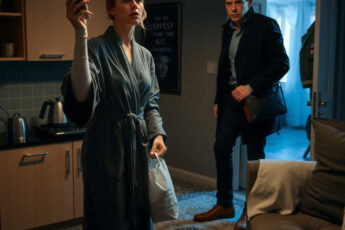
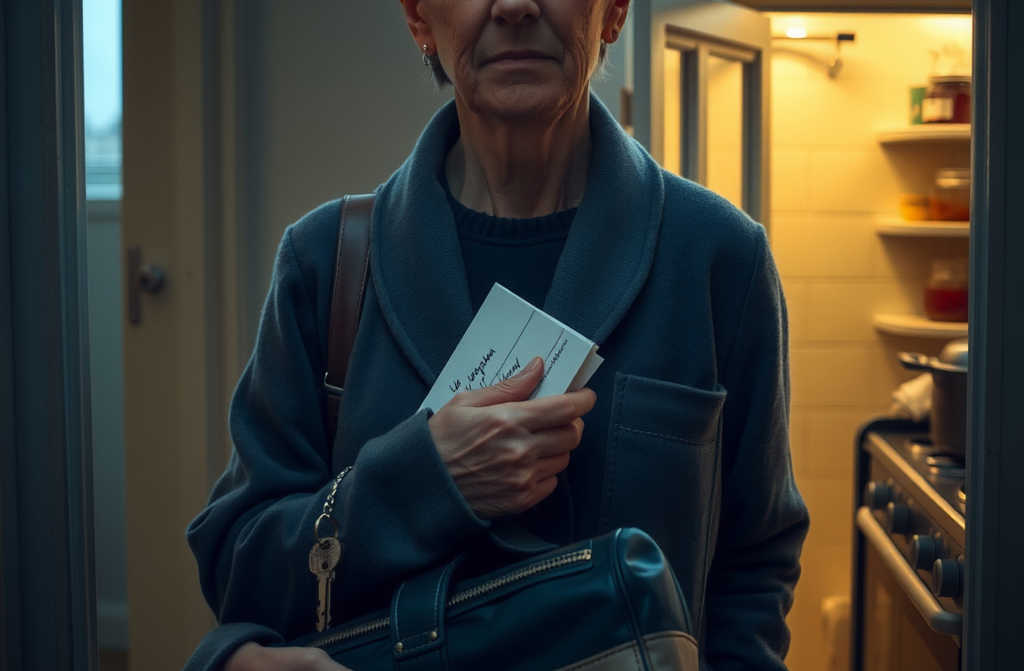
I was in the kitchen, just finishing up the last of the beans when the lock on the pantry clicked. Helen my mother vanished through the narrow gap in the pantry door a breath before the bolt turned. She pressed her back against the row of tins, felt for the inner handle and eased it open just enough to leave a slit no wider than a finger. Her breathing was shallow, a harsh rasp, and she pressed her palm over her mouth. The hallway was dead quiet; any sound would have echoed through the flat like a gunshot.
The front door burst open.
Colin, my brother, let out a cough and stepped into the hall. Through the thin opening I could see his hands clutching two white grocery bags, the plastic handles digging into his fingers.
Mum! Are you home? he shouted.
Helen tightened her grip on the cupboard edge.
Helen had been living alone for five years now. When her husband, Colins father, slipped away without warning the way many people do when they can no longer bear the silence of their own pain her heart simply gave out.
The first year without him was the hardest. Not the grief itself she could bear that but the deadair silence that settled over the flat. Colin would laugh so loudly at the TV that every word in the kitchen seemed to vibrate. In the bathroom he sang offkey, mangling both lyrics and melody without a hint of embarrassment. Now, with the bathroom door forever shut, the only sound is the constant gurgle of the pipes, and that gurgle feels deafening.
Our sister Blythe arrived from Manchester within days. She stayed for two weeks, cleaning, cooking, and at night curling up beside my mother on the bed, offering company without demanding conversation. It was priceless.
David, my son, never turned up, not then and never later. Its been eleven years since he disappeared, and Helen has long stopped explaining the why out loud, though she replays the story in her head over and over like a scratched record.
The circumstances of his leaving were messy and painful, as they always are when truth is kept under the rug for far too long. David had been a difficult child: sharptongued, quicktoflare, prone to tantrums over anything. He barely managed school, repeating year six and crawling out with a string of Cs. His sister Blythe was his opposite calm, diligent, a constant Astudent.
David resented Blythe, snapped at any criticism, and Colin would erupt occasionally, though he tried desperately to keep himself in check.
When David turned nineteen, Colin sent him to his mothers sister, old Aunt Claudia, in a village near York, hoping the countryside would give him some honest work, fresh air, and a break from city idleness. Claudia was blunt to the point of harshness; she never held her tongue and didnt see any use in it. When David mangled something in the garden, she snapped, What did you expect, you little sprout?
David flew back to London the same day, dropped his bag in the hallway, trudged to the kitchen, sat down and asked in a flat, almost monotone voice:
Is it true?
Helen looked at Colin. Colin looked at her.
Wed been planning to tell David the truth ourselves, waiting for the right moment, always postponing, convincing each other that it was still too early, that hed just grow a little more.
Truth is, Helen said, we took you from the orphanage when you were eight months old. You screamed, shook the whole ward, but the moment you saw us you fell silent and stared at me.
I told Colin then, Our boy, theres nowhere else to go.
David stood, left the kitchen and went to his room. Colin and I lingered at the table until midnight, talking about everything except that because we simply didnt know how to.
A few days later David vanished. He took the money wed been saving for his dorm room, the little surprise wed planned for autumn. He staged his own surprise first.
Colin hardly mentioned him out loud. He would sit by the window for hours, staring at the street. I could see his grief, but I never pressed him; Colin dealt with pain by keeping silent, and I respected that. A few years later his heart gave out as well.
David reappeared at the beginning of April. He knocked gently, no ring as though he wasnt sure anyone would answer.
I opened the door and stood there, watching him: a thirtyyearold man with a noticeable stubble, a slight hunch, clutching a bag of mandarins.
Mum, he said, Im sorry. I was foolish back then.
He sounded boyish, almost childlike.
I didnt know what to do with him.
I want to make amends, he added. If you give me a chance.
I pulled him into an awkward hug at the doorway. He returned it clumsily, as though hed forgotten how to hold someone after years of none.
Over dinner he told me hed worked as a chef all over the country from Brighton to Newcastle starting in cheap takeaways before moving up to respectable restaurants. He was genuinely good at it.
I watched him carve a chicken with practiced ease and thought how oddly life works: a man disappears for eleven years and returns to fry you cutlets.
He settled back into his old room, unpacked his things, and each morning brewed porridge or scrambled eggs. I called Blythe every evening.
Back, you say? she murmured on the line. Hows he holding up?
Fine. Polite. Cooks a proper chef now.
Are you sure everythings alright? Eleven years is a long stretch.
Blythe, hes my son. Dont act like a stranger.
I phoned relatives across the country, telling them: Davids back, Davids home. My cousin in Birmingham laughed on the phone, saying, No smoke without fire, and people dont just waltz back from the abyss.
I replied, Stop yammering, everythings fine.
About two weeks later I began to feel exhausted, far more than before. By evening my head felt like it was stuffed with cotton; the mornings left me dizzy. I chalked it up to springtime ailments a vitamin deficiency, bloodpressure swings, age. At sixty, health is a fickle thing, and theres nothing concrete to complain about. The main thing was David was here.
Blythe kept asking how I was doing; I said I was fine, just a bit weary, but it would pass.
Maybe see a doctor? she suggested.
Dont be ridiculous. Im not going to queue at the clinic for every little fatigue. Appointments are weeks away anyway; itll pass.
It didnt. Nausea grew, my head felt heavy by lunch. I took vitamins, brewed rosehip tea, and tried not to obsess.
That night I woke before six, the grey April sky hanging outside, the street empty. My mouth was bonedry; I swallowed hard, slipped on my slippers and shuffled to the kitchen for water. The hallway lights were off; I knew the flat blindfolded, every corner.
I didnt get to the kitchen before I halted.
David stood at the stove, one burner alight beneath a pot of porridge. He held a small plastic sachet, tipped its powder into the pot, then stirred carefully with a spoon.
I retreated down the corridor, reached the bedroom, flopped onto the bed and pulled the blanket over me. I stared at the ceiling, eyes wide open, pretending to sleep. Minutes later the bedroom door creaked open. I squeezed my eyes shut, breathing evenly, trying to mask my fear. I felt Davids gaze through the door. He lingered, then shut the door.
The front door slammed. I opened my eyes. Dawn was breaking. I lay there, counting dates in my head: when the nausea began, when the crushing fatigue settled in. The timeline matched exactly the day David moved back in and took over the cooking.
I got up, dressed and decided to visit my neighbour, Mrs. Tamara, on the third floor. Shes sensible, doesnt waste words, and can sort a mess without shedding tears. I was pulling on my coat in the hallway when the lock clicked. I didnt even realise Id slipped back into the pantry.
Through the slit I saw David pull his phone to his ear.
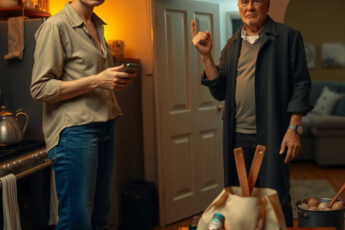
Hello? Yes, Im home. He paused. No, the old ladys gone missing, I cant find her. He paced the hall. Dont panic, Im telling you.
I thought it was just a vitamin deficiency or high blood pressure. Hmph, I muttered, how it ends, well clear the flat, its simple, and Ill be there.
He muttered, I forgot to stop at the chemist again, his voice edged with irritation. Ill be there soon, wait for me.
The door slammed. Footsteps faded on the stairwell.
I stepped out of the pantry, stood in the entryway, and stared at his coat on the rack, his boots by the door, the spare key on the shelf. The lower lock only fit my key; I never gave a spare to anyone.
I packed my bag in twenty minutes: documents, my pension card, a tiny framed photograph of Colin. I called Blythe.
Mum, why so early? she yawned into the phone.
Im thinking of coming to you, I said. Ive missed you.
Come, of course. When?
Today.
Today?! Blythe sat up straight. And David? He should come too, I want to finally see my brother.
Davids off on some odd job, not around.
Fine, just send the train number, Ill meet you.
I slipped my phone away, gathered Davids things that had collected over the month a few shirts, a razor, a battered paperback and tucked them into his duffel, zipped it up. I placed the bag on the stair landing, pulled a piece of paper and a pen from my coat pocket, and wrote, slowly, legibly:
David. I love you, always have, and will always love you, even if you never deserved it. Thats why I wont go to the police. But I dont want to see you again. Never. Mum.
I folded the note, slid it on top of the bag, closed the door on the lower lock with my key, and slipped the key into my coat pocket.
I caught the bus to Victoria Station, descended into the Underground, boarded a train and stared not at the adverts above the doors but at my reflection in the dark window. The train jerked forward.
I transferred at Kings Cross, then at Liverpool Street. The platform at the final stop was empty and echoing. I bought a ticket to Manchester for the midday service, found a seat in the waiting room, and watched a man feed pigeons with crust crumbs. The birds pecked, flapped, and shuffled about.
I sat, thinking Id have to tell Blythe the full story eventually. Not now, not at the doorway, but sooner rather than later. Shes smart; shell understand and wont wail pointlessly.
I tried not to think about David at all. It was a terrible habit.
Blythe met me on the Manchester platform, rushed over and hugged me hard before any words could be said. I leaned my head against her shoulder and closed my eyes.
Mum, she whispered, what happened?
Ill tell you later, I replied. First, lets get home.
We walked together down the platform, Blythe bearing my bag, the weak morning sun casting a gentle glow.
I kept thinking that back in London, on the top shelf of the pantry, there must still be a jar of cherry jam that Helen saved from last August, never opened, waiting for winter. Let it stay there. Happiness isnt canned.
**Lesson:** Even when the past returns in the most unexpected form, the only way to protect yourself is to recognise when love has become a trap and to lock the door on the memories that no longer serve you.