June9,2026
Dear Diary,
The day we laid my dear Margaret to rest it was drizzling, a soft rain that seemed to echo the emptiness settling over me. My little black umbrella could not shield the ache that clung to my heart. I held a stick of incense, stared at the freshly turned earth, still damp, and felt my hands tremble. My partner of nearly forty yearsmy Edwardhad become nothing more than a cold handful of soil.
The funeral passed in a blur; there was no time to wallow in grief. My eldest son, James, the one Edward trusted implicitly, seized the house keys without a second thought. Years earlier, when Edward was still in good health, he had said, We both grow older; lets put everything in our sons name. If its all his, hell be responsible. I never objectedwhat parent does not love their child? Thus the deed, the title, every piece of paperwork was transferred to James.
On the seventh day after the service, James called me out for a walk. I had no idea the outing would feel like a knife in the back. We stopped on the outskirts of Nottingham, near a bus shelter. James, his tone icy, said,
Get out here. Margaret and I cant look after you any longer. From now on youll have to fend for yourself.
My ears rang, my vision blurred. I thought I must have misheard, yet his eyes were fixed, as if he were ready to push me away at any moment. I found myself sitting by the roadside, beside a small offlicence, with only a sack of clothes. The house where I had lived, tended to Edward and raised my children, now bore his name. I had no right to return.
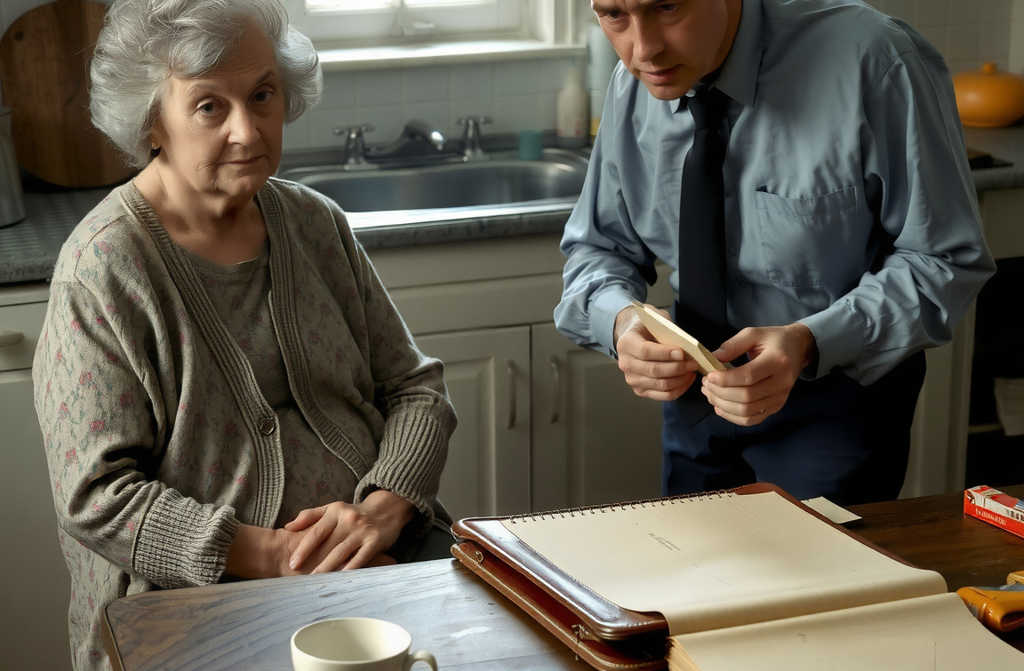
People often say, When you lose your spouse you still have your children. Yet sometimes children feel like you have none at all. My own son had cast me into a corner. What James didnt know was that I wasnt wholly destitute. I kept, in my coat pocket, a battered bank ledger containing the savings Edward and I had amassed over a lifetimeabout three hundred thousand pounds. We had hidden it from our children and everyone else. Edward used to warn, People are only kind while you have something in your pocket.
That day I chose silence. I would not beg, nor would I expose my secret. I wanted to see how James and life would treat me.
The first night, abandoned and shivering, I slipped under the awning of a tiny tea room. The proprietor, Aunt Clara, took pity on me and offered a hot cup of tea. When I told her I had just lost my wife and my children had left me, she sighed,
Its a sad story you hear more often these days, dear. Some children value money more than love.
I rented a modest room in a boarding house, paying the rent from the interest on my savings. I kept my fortune hidden, never mentioning it to anyone. I lived simply: worn clothes, cheap bread and beans, and tried not to draw attention.
Many evenings I curled up on the creaky wooden bed, recalling the old house, the whir of the ceiling fan, the scent of spiced tea Edward used to brew. The memories hurt, yet I reminded myself that as long as I was alive, I must keep moving forward.
Gradually I adapted to my new circumstances. By day I begged for work at the marketwashing vegetables, hauling crates, wrapping parcels. The pay was meagre, but I didnt mind. I wanted to stand on my own two feet, not rely on charity. The stallowners began calling me Mrs. Thompson. They had no idea that each night, after the market closed, I would unlock my tiny room, pull out the ledger, glance at the figures, and tuck it away again. That secret sustained me.
One afternoon I ran into an old school friend, Mrs. Harper. Seeing me in the boarding house, she listened to my tale of loss and hardship, and offered a job at her familys roadside inn. I accepted. The work was hard, but it came with food and a roof over my headstill enough reason to keep my savings concealed.
Meanwhile, I heard news of James. He lived with his wife and children in a large suburban house, had bought a new car, but spent his evenings gambling. A neighbour whispered, Hes probably pawned the familys land deeds already. I listened with sorrow but refused to contact him. He had abandoned his mother at a bus stop; there was nothing left for me to say.
One evening, while scrubbing the inns kitchen, a welldressed stranger entered, his face tight. I recognized him as a drinking buddy of James. He stared at me and asked,
Are you Jamess mother?
I nodded cautiously. He leaned in, his voice pressing,
He owes millions. Hes in hiding. If you still love him, help him out.
I felt a chill. I managed a thin smile,
Im very poor now. I have nothing left to give.
He left angry, and the encounter lingered in my mind. I loved my son, yet his cruelty still cut deep. He had left me at a bus shelter; now he faced his own consequences. Was that fair?
Months later James came searching for me. He looked gaunt, eyes rimmed with red, and fell to his knees, sobbing,
Mother, Ive been a wretched man. Please, save me. If not, my family will be ruined.
My heart hammered. I recalled the nights of silent tears, the moment of my abandonment, and also Edwards last words: Whatever happens, he remains my son. I stayed silent for a long while, then slipped into my room, retrieved the ledger with the three hundred thousand pounds, and placed it before James. My stare was calm, yet resolute,
This is the money your parents saved over a lifetime. I hid it because I feared you wouldnt cherish it. Now I give it to you. But remember, if you ever trample on a mothers love again, no amount of wealth will ever lift your head with dignity.
James clutched the papers, tears streaming like the rain outside.
I cannot know whether he will change. Perhaps he will, perhaps not. Yet, as a father, I have fulfilled my final duty. The secret I guarded for decades has finally seen the light, just when it was needed most.
**Lesson:** Wealth can ease hardship, but without love and respect, even a fortune cannot repair a broken heart.