I suggested we keep our money apart, and she quietly stashed away enough for a holiday without ever asking me first, then left me standing alone.George, 52. You asked for separate finances, George
But not *that* separate!
How separate? So I save and you decide where I may spend?
Honestly, I still cant pinpoint the exact moment my brilliant scheme turned against me. At first it seemed sensible, convenient, andmost of allfair, at least in my head where I always see myself as the chief strategist of a relationship and my partner as the diligent executor, never taking initiative or making independent choices.
Im 52, not a boy; Ive been married, divorced, gathered experience, made mistakes, drawn conclusions. When I met Mabel, 46, eight years ago, I was convinced I had finally found a woman with whom life could be calm, dramafree, without the modern fuss about personal boundaries, financial independence, and other ideas I used to think only muddied a proper manwoman partnership where things were simple: the man leads, the woman follows.
We lived in my flat in Manchester; I always hinted at that, not bluntly but subtly, to remind her that her comfort came from me. Everything was fineuntil the notion that later proved to be the beginning of the end slipped into my thoughts.
Separate budget.
I floated the idea calmly, without pressure, as if I were being noble, explaining that it was modern, honest, transparent, that every adult should be responsible for their own money, that it would erase complaints, misunderstandings, and endless arguments about who put in what. To my surprise, Mabel agreed instantly, without debate, without conditions, without hysteriajust a nod and a simple, Alright, lets try it.
Thats when, looking back, I should have raised an alarm.
Because a woman who says yes too quickly isnt always being submissive; sometimes shes already decided everything in her mind, and Im simply unaware.
The first months were pictureperfect. We split the grocery bill, the utilities, the household costs; each of us paid our own share, and I felt a sweet sense of fairness, a balance Id never quite managed before. I no longer felt the old irritation of paying a bit more, even though I tried not to show itafter all, a man is supposed to be generous, but within reason.
And thenbeauty.
Each for herself.
Later I learned that each for herself stretched beyond the ledger.
It also meant freedom.
And I hadnt accounted for that.
About six months in, I began to notice Mabel changing. Outwardly she was the samecooking, cleaning, caringbut there was a new quiet confidence, a calm independence that started to make me uneasy. I had grown used to feeling that she relied on me to some degree; now she didnt.
She stopped consulting me. She stopped asking. She stopped checking in.
At first it was little things. Then it grew. I saw new bags, shoes, little splurges that, to my eyes, seemed unnecessary, and I wondered where the money for them came from, since we were both saving for a vacation.
Yes, we had agreed to fund a summer getaway together, to plan it responsibly, like mature adults. I trusted that she would be as disciplined as I was.
Well not quite.
Because, to be honest, my own money had been drifting. Id lent a few pounds to a friend, cleared a small debt, bought a gadget here and therenothing serious, but the sum Id meant to set aside for the holiday never quite added up.
I didnt worry; I assumed wed sort it out together, that Id chip in where needed and she would do the same. After all, its a partnership, not an accountants spreadsheet.
Mabel, however, saw it differently. To her, it *was* accounting.
One evening she said, flatly, without a flicker of emotion:
I bought tickets.
I was taken aback.
What tickets?
For the sea. Four weeks. With a friend.
It hit me like a gust of wind.
With a friend? What about me?
You said it was a waste of money.
I remembered that a couple of months earlier shed suggested we travel together, and Id brushed it off, insisting we could enjoy a cheaper break, maybe a weekend at the lake or a day out in the countrysidejust like normal folks.
Shed heard me, drawn a conclusion, and moved onwithout me.
You could at least have asked!
Ask about what? Those are my pounds.
Inside, everything turned upside down.
Formally, they were *her* pounds. Yet it felt wrong. Not marital, not masculine.
I tried to explain that decisions in a relationship arent made solo, that you cant just pack a suitcase and leave me alone as if my opinion meant nothing. She looked at me, serene, unruffled, and said:
You suggested separate finances. I just followed the rules.
In that instant I realized Id walked into a trap of my own design.
My version of a separate budget carried a tiny, unspoken clause: I would decide, she would merely participate. In reality it flipped. She became equal. And that equality was the most unsettling thing of all.
Equality isnt just about duties; it also hands over rights. I wasnt prepared for that.
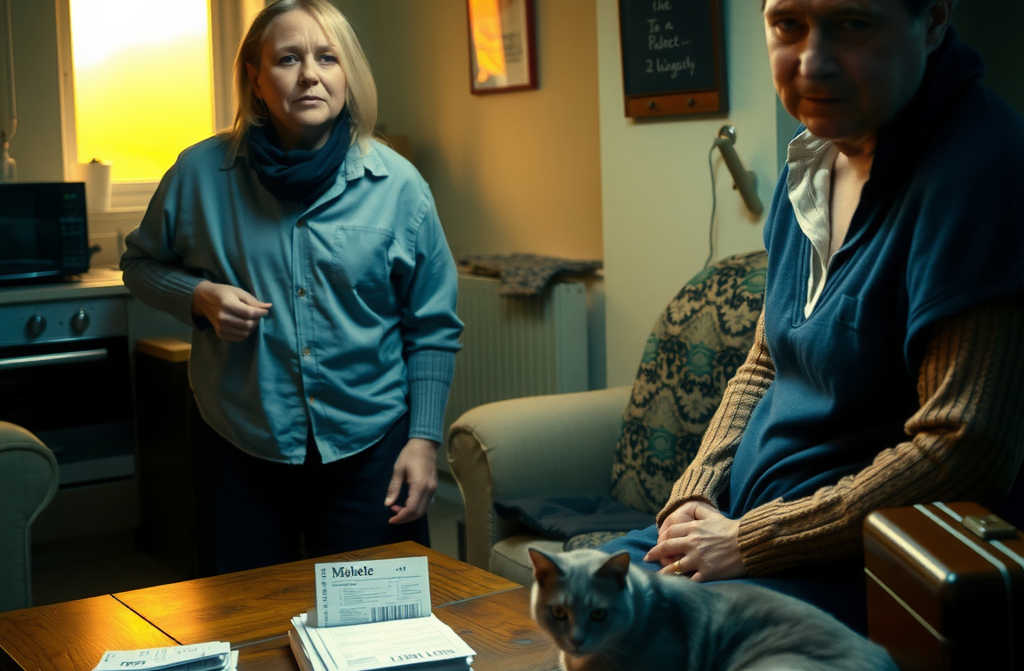
She flew away, leaving me with Whiskers the cat, a stack of unpaid bills, and a house that suddenly felt hollow, as if the walls no longer belonged to me. For the first time in years I was truly alonenot just physically, but in the deepest sense.
She sent messages, photos of sunlit beaches, cheerful notes about how peaceful she felt, each one dripping with the one thing that irked me most: she didnt miss me. She didnt beg to return, didnt feel guilty. Thats when the thought struckmaybe the problem lay with me, not her. Yet I still resent that conclusion, preferring to label her as overstepping, spoiled, or granted too much freedom, rather than admit that I wanted a convenient model where a womans independence stopped precisely where it became inconvenient for me.
When she came back a month latertanned, composed, a stranger in my own homewe resumed cohabiting, but the dynamic had shifted. We no longer broach the budget; she doesnt either. Between us now stretches an invisible, palpable line.
The most painful realisation is this: the issue was never about pounds or a holiday. It was about seeing equality not as a polite slogan but as lived reality, and discovering I wasnt ready for that sight.
*Psychologists note*
The tale illustrates the clash between proclaimed equality and a hidden craving for control. The man proposes a split budget as a fair tool, yet expects an informal hierarchy to stay intact, with his voice still the final word. When the woman interprets the rules literally and begins to act as an autonomous agent, cognitive dissonance erupts: outward equality, inner loss of authority. This breeds irritation, resentment, and attempts to restore the old order through blame and moral pressure.
True equality cant be halfhearted. You cant separate only the finances while retaining unilateral decisionmaking. When a partner gains financial independence, they inevitably gain independence in choiceswhere to live, what to spend, with whom to travel. The protagonists crisis stems not from his partners actions but from the collapse of a familiar relational model that placed him at the helm. Until he revises his expectations of a convenient partner, any attempt at genuine partnership will continue to sow inner conflict and disappointment.