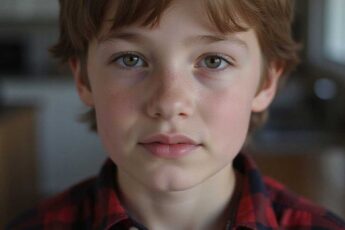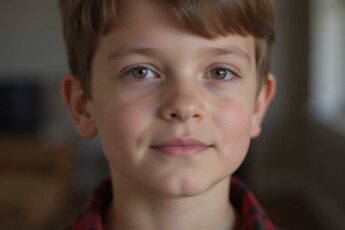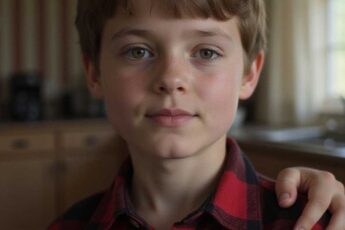
Ill ring my dad, whispered the girl in the first desk, pressing the phone to her chest as if it were the last thread tying her to home.
For a heartbeat the usual classroom chatter died. The Year2 pupils froze over their notebooks, a foot stopped tapping under a desk, and the gingerhaired boy by the window lifted his head to glance at MissClarke. She stood beside the desk, palm outstretched, voice steady, though a sore in her sleeve above the elbow reminded her of the illchosen longsleeve shed picked that morning. It was loose enough that, if she raised her arm to the blackboard, the cuff might slide down.
Emily, one rule for everyone, MissClarke said. Phones stay in my desk until after the lesson. Then you can collect them.
Emily didnt argue, didnt start sobbing, didnt pretend she hadnt understood. She simply looked at the nowdark screen and, with a slow thumb, swiped the blue case. Her blond hair was tied in two plaits, one clearly shorter than the other. MissClarke imagined the plaits must have been made by a caring father and felt a softening in her chest.
Dad wrote that hell pick me up early, Emily said. I just wanted to check the time again.
If its urgent well call him from the office, MissClarke replied. But for now, hand it over.
Emily lifted her eyes. There was no childish defiance that usually made teachers sigh. Instead there was a careful test: could an adult be trusted with something that mattered to her? MissClarke recognised those looks instantly; they werent tantrums. They were the gaze of children who already knew adults could be many things, and a loud voice didnt automatically mean right.
Emily placed the phone on MissClarkes palm.
Hell be here soon enough, she murmured.
MissClarke slipped the phone into the top drawer of her desk and turned back to the blackboard. Mathematics had to start again; the children had already lost the thread, and she caught herself watching Emily rather than the equations. Emily sat upright, pencil neat, but every few minutes her eyes flicked to the round clock above the door. MissClarke endured until the break, handed out a slip, and sent the girl to the office to call her father.
The dutyroom aunt, MrsNina, who had spent two decades dealing with every sort of parent, chatted with Emilys dad and then marched into the headteachers office. She whispered something, and the headteachera portly man perpetually clutching a battered folderleapt up so fast his folder hit the floor. MissClarke heard about it later; for now she was still on reading, trying to coax Tim from the third row into reading steamboat without a drawnout hesitation.
A knock sounded at the end of the second period. Not loud, but enough for the class to know adults were at the door. The headteacher entered first, smoothing his thinning hair. Behind him followed a tall man in a dark coat, calm and composed, the sort of bloke who makes you lower your voice without even trying. He wasnt the stereotypical angry parent barging in to claim his child was always right. He simply made an impression.
Emily stood.
Dad.
The man looked at her, and for a split second his face softened in the way that had kept Emily holding on all day. He didnt grin wildly or fling his arms wide, just let his gaze melt a little.
Everything alright, love?
Yes. Only MissClarke took my phone.
He turned his eyes to the teacher.
Richard Lonsdale, father of Sophie. I was told theres a phone issue.
The surname rang familiar. The school had recently benefited from Lonsdale Builders refurbishment of the sports hall and a batch of new computers. Everyone knew, without saying aloud, that MrLonsdale didnt mingle with people he could speak to casually.
Your daughter took the phone in class, MissClarke said. I kept it until the end of the day. When I realised she needed to get hold of you, I let her call from the office.
She spoke evenly, though a tremor tried to creep into her voice. In front of the headteacher, the tall man, and twenty curious eyes she had to hold onto both the rule and herself. MrLonsdale listened without interrupting, then nodded.
You did the right thing.
The headteacher cleared his throat loudly, pretending it was a cough. Emily frowned, but her father crouched down to her level.
The teacher is the adult in charge here, he said. If MissClarke says put the phone away, you put it away. Ill come, even if you check that message ten times. Deal?
Emily, always a little too serious for her age, nodded.
Deal.
MrLonsdale asked for the phone but didnt slip it into his pocket. He handed it back and told Emily to stash it in her bag. As he lingered at the door, MissClarke raised her hand to fix a stray lock of hair, and her sleeve slipped. A faint dark smudge appeared at the cuffs edgesomeones fingerprints, perhaps. She dropped her hand quickly; MrLonsdale caught the movement but said nothing, merely looked at her so intently that she wanted to retreat to the chalk and the neat rows of childrens notebooks where mistakes could at least be corrected in red.
After school, Emily was the last to leave. MissClarke escorted the class to the gates. A black car idled by the roadside. MrLonsdale opened the back door for his daughter, helped her into the seat, and was about to walk around the car when Emily rolled down the window.
MissClarke, see you tomorrow.
Tomorrow, Emily.
The car drove off, and MissClarke lingered on the steps. Going home didnt feel appealing. Her stepfather, Steve, might be waiting. If he wasnt, the anxiety didnt lessen: shed have to guess his mood from the creak of the staircase, hide her wallet so he wouldnt find it at first glance.
Steve was her stepdad. After Emilys mother died, he became the legal guardian of her younger brother, Milo. Milo was ten, sensitive to loud noises, ate only from the white plate with the blue stripe, hated anyone touching his pencils, and could spend hours arranging buttons by size. When his mother signed the papers, she still believed Steve was reliable, just a bit rough around the edges. MissClarke, then a student working evenings, didnt realise his brusqueness was a core trait, not a flaw.
She could have walked away alone. Probably. But Milo was not for sale. On paper Steve was the primary adult, while MissClarke was the older sister earning a modest wage, a temporary flat, and a folder of paperwork that still needed to be turned into a court order. The solicitor demanded an advance that made her fingers go numb. She had been saving for three years, only for Steve to drain the money each time he lost at cards or returned home with bloodshot eyes and empty pockets.
One evening he arrived earlier than usual. The stairwell smelled of damp cloths and old paint, the familiar heavy scent that rose from the first landing after a cleaning. MissClarke recognised it instantly as a sign the downstairs door had been left open too long.
Wheres the money? Steve asked, shoes still on.
Milo sat on the carpet near the sofa, building a long line of matchboxes. MissClarke placed a chair between them, as if by accident.
Salarys on Friday.
Youve told me that already.
Because its on Friday.
He stepped closer. MissClarke kept her voice low; shed learned that raising it only fed his anger. Steve slammed his palm on the table; Milos boxes trembled, and the boy began whispering numbers, stumbling, then starting again. She rested a hand on his shoulder but kept her eyes on Steve.
Not with him.
What about with whom? Steve smirked. Your headmistress? The neighbours? Or have you found a guardian?
She said nothing. Nights like that forced her to choose clothes not by weather but by the smudges on her hands. At school she smiled at the children, stuck stickers in their workbooks, explained where the soft sign went in a word, and constantly felt as if she lived in two rooms with no door between them.
A few days later she spotted a car outside her house, then another outside the school. The men inside never looked at her, never got out, never struck up conversation. They were simply there. On the third day, MissClarke approached one after lessons. He was about fifty, in a grey coat, cradling a coffee cup, looking as if he could sit there until winter.
Are you from Lonsdale?
Yes.
Tell him it looks odd.
I will, he said. But until you ask me to take the post down, Ill stay.
The post? Seriously?
Absolutely.
She wanted to be angry, but fatigue rose instead. That evening a plain envelope was handed to her. Inside lay a card with the address of a tiny café near the school and a line: Tomorrow after school. Just a chat.
She went not because she trusted him, but because she no longer knew where to turn with Milo.
MrLonsdale sat at a corner table. Two untouched cups of tea stood before him. He rose when she arrived, but didnt extend his hand, as if he anticipated she might recoil.
I wont pretend I just happened to notice your situation, he said as she sat. Emily saw the marks on your wrist. She asked me to find out if I could help.
Your daughter shouldnt have to think about these things.
I agree. But she does. Since her mothers gone, Emily watches people a little too closely.
MissClarke gazed out the window at a mother fixing a childs hat, the boy chuckling. The simple scene felt almost foreign.
I dont need pity, she said.
Im not offering pity. Im offering a solicitor who handles guardianship and some temporary security for you and Milo.
For what?
For not being intimidated by my name and not using my child as a pawn in the classroom.
She snapped toward him.
Thats not a favour. Its my job.
Exactly why I want to help.
His calm irritated her more than any pressure would. Shed grown used to aid coming with a string attached. Steve once helped her mother: brought groceries, fixed the tap, drove her to appointmentsonly to have every act logged in an invisible debt ledger.
If I agree, youll claim I owe you, she warned.
No.
Thats what everyone says.
So dont sign straight away. Meet the solicitor. Listen. The decision stays yours.
The solicitor turned out to be an elderly woman named Nina Archer, shorthaired, with a folder that opened like a courtroom docket: certificates, neighbour statements, school reports, Milos medical notes. Her middle name sounded as stern as her demeanor. Nina didnt promise swift victories; she spoke dryly and directly.
Steve will fight, she warned. Not because he wants Milo, but because he wants control and the money that comes with it. We need proof, time, and your stamina.
MissClarke nodded.
She had stamina. Sometimes it felt like she was the only thing left.
The case grew messy. The court first asked for more documents. Steve produced a neighbour who swore MissClarke caused domestic dramas. The school formed a committee that claimed the teacher was unstable and couldnt look after children. The headteacher fidgeted with his tie while MissClarke faced two women with tablets, answering as evenly as she had answered MrLonsdale at the board.
After school, Emily slipped her to a drawing. It showed the school, a tall woman in a blue cardigan, and a small girl beside her.
Thats you, Emily said. You stand at the door so everyone can go home.
MissClarke couldnt answer straight away. She placed the picture on the desk next to the class register, thinking children sometimes hold an adult up better than any flowery speech.
Meanwhile Steve grew angrier. He showed up with threats, then with a plaintive plea to keep the family tidy, then with promises to behave. One night he locked Milo in a room so MissClarke couldnt take him to a therapist. The boy spent three hours in a corner lining up pencils until his fingers trembled. That night MissClarke stopped doubting. It wasnt just fear or hurt; she finally cut the cord of her old habit of tolerating abuse.
Im filing the claim by the end of the month, she told MrLonsdale on the phone. Even if he pushes.
Alright.
Ill even sign the contract with Nina, even if its for a pound.
Shes ready.
You already know everything?
No. Just hoping people sometimes pick themselves.
A temporary order for Milo arrived a month later. Not final, but enough for him to stay with MissClarke while the case ran its course. Steve stood outside the courthouse, staring as if ready to smash everything. Beside him was MrLonsdales associate, Serge, the greycoat man. He didnt intervene, just opened the car door where Milo sat with his backpack on his knees, staring at a point on the floor.
Are we going home? he asked.
Yes. To another.
MissClarke climbed in beside him.
Lonsdale had found a modest flat not far from the school. MissClarke insisted on a written agreement and a modest rent. He didnt arguefar more generous than any charity. The new home was quiet: two rooms, a kitchen with a long windowsill, an old coatrack in the hallway, and a view of the playground. Milo initially walked the rooms with a notebook, noting where everything lay. On the third day he left his pencils on the table and didnt put them back in his bag. To him that meant more than any adults words.
Emily began dropping by after lessons with her dad. First half an hour, then an hour. Shed sit on the edge of the carpet, building towers next to Milo, never touching his line. One day she nudged a green block toward him. MissClarke stood by the stove, terrified to turn around and disturb the delicate world they were slowly building.
Things with Lonsdale were oddly simple. He didnt flood her with texts or buy her peace. Sometimes he brought books for Emily and stayed for tea. Occasionally he fixed a shelf while Milo watched, making sure the screws were the right size. One evening, when the children argued over a board game, Lonsdale said:
Im used to solving things quickly. With you, that wont work.
Because Im not a problem, he replied, smiling faintly.
Right. Got it.
Steve didnt vanish overnight. He called from unknown numbers, loitered near the old house, tried to learn the new address through acquaintances. Once he turned up at the school, but Serge spotted him at the gate before MissClarke could leave with the children. After that Steve disappeared for weeks. MissClarke began sleeping more soundly. Milo stopped checking the lock before bed. One dinner Emily said:
This place feels good. Quiet, but not empty.
MissClarke tucked that line into memory.
The final hearing was set for Monday. The night before, Milo chose his shirt, packed his notebook, and rehearsed a line Nina had asked him to say if the judge asked where he felt safest. In the morning he whispered it clearly:
I want to live with Vicky because she knows how to line up my cups and doesnt get angry if I think for a long time.
MissClarke sat with her hands on her knees, fighting the tremor that rattled her inside. Steve tried to argue about family, gratitude, and how MissClarke was young and couldnt cope. But the room was full of documents, reports, and Nina, who stopped his words from spreading like a virus. When the judge finally handed the guardianship to MissClarke, she stepped out onto the street and found it hard to take a full breath, as if her lungs still didnt trust the stamped paper.
Milo stood beside her, gripping her sleeve.
Now he wont take me? he asked.
No, she said. Now he wont.
Steve heard it. He said nothing, just gave a short, awkward smile. Serge moved closer, and the stepdad disappeared down the stairs.
That evening Lonsdale arrived with Emily. No celebration, no applause. MissClarke fried pancakes, Milo set the plates, and Emily placed her drawing on the fridge: four figures at a window, a red block on the sill.
Lonsdale stared at the picture, then said, Nice house.
Its not a house yet, Milo corrected. Its a plan.
Then well build to the plan, Lonsdale replied.
Three weeks later, with everyone convinced the worst was behind the door, Saturday evening arrived. MissClarke was making pancakes, Emily reading to Milo, and Lonsdale was about to step out for a quick run when the intercom chimed. A delivery man with a box stood at the door.
Delivery for Sophie Lonsdale, from dad, the man announced.
She lifted the chain, opened the door, and Steve burst in, slamming the door harder than necessary. The box fell, and in his hand gleamed a kitchen knife. His face went paleMissClarke stepped forward, her hand steady on Emilys shoulder, and said, Youll have to go through that door without us, Steve, because were finally the ones who decide who gets to stay.She kept her eyes on the knife, the metal catching the dim light. The room seemed to hold its breath. Emily clutched Milos hand tighter, his small fingers trembling.
Put that down, Vicky said, calm as she had learned to be, yet fierce. You have no right to threaten us.
Steve hesitated, the weight of the blade feeling heavier than his anger. Somewhere outside, a sirens wail grew louder.
At that moment the front door burst open a police officer, accompanied by another uniformed presence, stepped in. The officers gaze fell on the knife, on the trembling faces, and then on the man who had once been a guardian.
Sir, drop the weapon, the officer commanded. Youre under arrest.
Steves eyes flickered to the officer, then to the faces of the children. Something cracked inside him; the mask fell.
He dropped the knife onto the floor with a clatter, and the blade rolled to a stop against Milos notebook. The silence that followed was louder than any accusation.
Vicky knelt, picked up the knife, and placed it in a box, sealing it. She turned to the officer and said, Thank you.
Emily hugged Milo, her small body pressing into his shoulders, and whispered, Were safe now.
Later, as the night settled, the house felt different. The air was lighter, the shadows thinner. The kitchen table, once a battlefield, now held a simple breakfast, the scent of maple syrup filling the room.
Vicky looked at the drawing on the fridge the four figures at a window, the red block on the sill and felt a quiet joy swell in her chest. It was more than a picture; it was a promise of a future built together, one brick, one block at a time.
She lifted her cup, the steam rising like a soft sunrise, and said to the room, We may have started with rules, but today we wrote our own.
The children cheered, their voices mingling with the clink of plates. Outside, the street was quiet, and the first stars of the evening blinked like hopeful eyes.
And in that moment, the door that had once been a barrier now stood wide open, inviting everything that was yet to come.