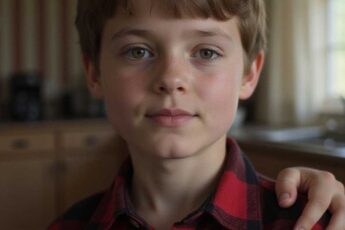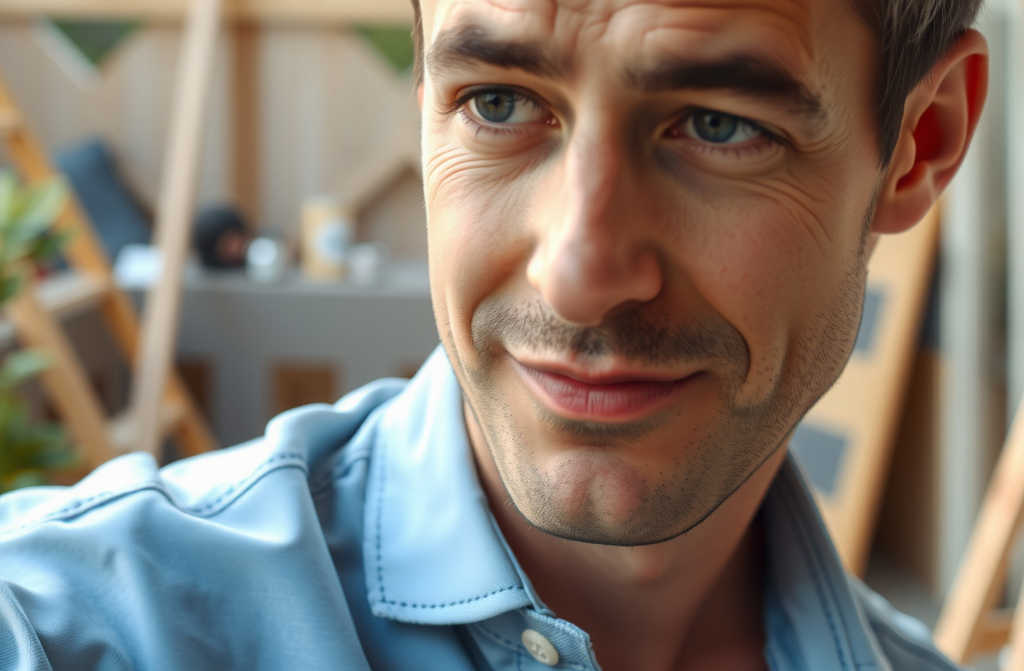
“David, who’s that? Why are there so many people here?” my mother, Christine, whispered, clenching my younger brother’s elbow tighter. A flash of thought cut through me—she’d sold the cottage without asking, and these strangers had turned up to take over. The thought left my mouth dry. She let go of his hand, stared at the garden, and the world seemed to pause.
The boards reeked of fresh pine, a sharp, almost peppery scent that made Christine’s nose twitch as she walked through the gate. Now that smell was mingled with limewash and sweat. In the middle of the garden a crowd had gathered—perhaps twenty men in faded tees and dusty jeans, two women with rolls of plastic sheeting, a lad on a step‑ladder, another perched on the roof with a hammer, someone hauling bags of cement, another stirring a bucket of white slurry that gave off a harsh lime vapour. My once‑quiet, forlorn garden now resembled an April ant‑hill.
“David,” I said, voice hoarse, “do you see this? If you sold the cottage without asking, I won’t let you forget it. Tell me honestly—are these strangers?”
“ Mum, hold on, what new owners?” David stammered. “What are you talking about? They’re mine. All mine.”
“What do you mean ‘mine’? What’s happening? I’ve got my phone in my bag—if you can’t explain, I’ll call the constable.”
She reached for the bag hanging from her elbow, but her fingers failed her. In an instant a flood of memories surged—fifteen years of nursing that little cottage, the porch she never built because of David’s university fees, his car loan, my own dental work, the linoleum I kept postponing. Everything was waiting, and now strangers were trampling over the garden she’d tended like a child.
“Mom,” David said, tapping my shoulder, “listen. Those aren’t strangers. I invited them.”
Christine froze, bag at her side, looking at me as if for the first time. I was thirty‑five, with a hint of grey at my temples, broad shoulders—more like her than her husband. No fear, no defiance in my eyes, just a quiet, steady resolve.
“Who are you?” she asked.
“It’s me,” I replied. “Mom, they’re all ours. Some lads from work, a few from university, the boys from the street we used to kick a ball with. Remember Paul?”
She nodded. Paul had been skinny, forever hungry, always staying over for dinner because his own home wasn’t much. I’d slipped him extra portions back then, pretending not to notice his embarrassment.
“Paul’s here?”
“Yes—Paul, Sam, Mike the red‑haired one, and John, who stood by me at my wedding. Practically everyone you ever fed, Mum.”
I swept my gaze over the garden. The boy on the step‑ladder was the one I’d given my old bike to when his family moved into a council flat. The lad with the bucket was Sam, who’d shattered a window with a ball in Year 9; I’d simply asked him to replace it. They’d grown into men with strong hands and serious faces, now standing among the boards and saplings.
“Why?” Christine asked quietly. “David, why?”
I paused, then took her hand—gentle as if it were glass—and turned her toward me.
“You’ve spent your whole life saving for this cottage, Mum. Remember that porch you always wanted? A big one with sliding glass doors, so you could sip tea in summer and watch the sunset? You used to pin a picture of it from a magazine onto the fridge fifteen years ago.”
She recalled it, the yellowed clipping that had long since been lost when the fridge was replaced. It had been a relic she kept hidden.
“You put aside a little from every paycheck. Then I got a scholarship, tutors, we rented a flat when Vera and I married… Mum, you’ve been saving for a new bedroom wall for six years. Those floral wallpaper panels are older than me now. I remember you saying, ‘It’ll wait.’ But it won’t. Stop waiting.”
She fell silent. The hammer on the roof ceased, and Paul stared at us, the tool hanging mid‑air.
“I’m paying back your debt,” I said. “Free crew. We’ll finish in a week. Here’s the plan.”
I dug a folded sheet of paper from my back pocket, unfolded it, and handed it to her. It was a neat set of drawings, complete with dimensions and margin notes—not a magazine cut‑out, but a proper blueprint, designed around the old apple tree she’d begged us not to touch.
“We’ll work around the tree,” I said, meeting her eyes. “Reinforced foundations, underfloor heating—there’s a cheap, reliable system I’ve found. In November you’ll be sitting by a warm floor, wrapped in a blanket, sipping tea.”
A single tear slid down Christine’s cheek, catching at the corner of her lips. She didn’t wipe it away; she simply watched the grown‑up lads—once our football mates, once the boys who’d stolen hot meatballs from my pot, who’d swapped homework in the kitchen and argued loudly about video games—now here, free of charge, building the porch of her dreams.
A rustle came from behind the fence, and a head in a floral kerchief appeared. It was Vera, our neighbour to the left, the woman who always seemed to have a “I told you so” expression. She planted her hands on her hips, eyeing the commotion as if a national border were being redrawn.
“Christine, is that you?” she sang, voice metallic. “What’s all this ruckus? A market fair?”
“Good morning, Vera,” Christine said automatically, brushing a tear from her cheek. “It’s my son and his friends. They’re helping with the porch.”
“A porch?” Vera flapped her hands. “Do you have permission? You know the fines for unauthorised builds these days—sell the cottage and you’ll be left with nothing. And your plot is tiny, just three metres from my fence. Are you respecting the setbacks? I won’t stay quiet. My nephew works in the planning department; I can give him a heads‑up.”
I turned, walked over calmly.
“Good afternoon, Vera. We have the necessary approvals. The plans are approved, fire regulations met. My friend the architect signed off before we started. Would you like to see the documents?”
Her face flushed; she hadn’t expected that.
“Fine, let’s see what you manage. I don’t want the noise; my grandchildren won’t be able to sleep.”
“Nothing,” Christine replied, her voice steadier now. “Your grandchildren had pancakes with us last August when you forgot to feed them, so they’ll be fine.”
Vera pursed her lips and slipped away behind the fence. Paul, still on the roof, gave a low chuckle and went back to his hammer. For the first time in years, a spark of fierce determination lit within me. I would protect my mother’s dream.
The next two hours passed in a half‑dream. I set Christine on a folding chair under the apple tree, handed her an old chipped mug—the very one she’d used when she first took me to nursery—and poured steaming tea from a thermos.
“Sit,” I instructed firmly. “Your job today is to watch. No ‘just sweeping the floor’ or ‘watering the cucumbers’ excuses. Understood?”
She wanted to argue—habit had taught her to protest for forty years—but she didn’t. She leaned back and watched.
Paul and his mate were sawing boards, the saw shrieking enough to make the neighbour’s dog bark. Mike, now bald and solid, mixed mortar while chatting with a lady tending seedlings. I moved from one task to another, checking measurements, handing tools, nodding. My face was adult, focused, the master of this yard. I was the owner of the garden, the owner of the life I was returning to my mother.
By three‑o’clock the sun was low. I stood up, tired but satisfied.
“I’ll make lunch,” I told Christine.
“Mom—”
“No ‘mom’, we’ve got twenty people here, up since eight‑a‑m. What are they having, sandwiches?”
“Bread and sausage…”
“Exactly. Make it quick.”
I headed inside. The house was cool, the air scented with summer dust. I opened the fridge—egg cartons, a slab of butter, a three‑year‑old tub of kefir, mustard that had seen better days—and sighed. Nothing fancy. I’d have to improvise.
When I stepped onto the porch to fetch David, the girls with the plastic rolls handed me two massive grocery bags.
“Veggies, chicken, eggs, flour, butter,” one said. “David bought them yesterday. He said, ‘Mum will want to cook, don’t argue, just give us the supplies.’”
I took the bags, glanced at the girl, then at David, who was pretending to check the roof trusses.
“You,” I said over his shoulder, “how did you manage all this?”
“Mate, I’ve been prepping for three months,” he replied without turning. “Just tell me when the pancakes are ready.”
It was too much. I closed the door, pressed my palms to my face for a minute, then exhaled, rolled up my sleeves, and started on the batter.
Within an hour the yard held a long table the lads had cobbled together from the same pine boards in about fifteen minutes. Steam rose from three pans of potatoes I was simmering in succession—no large pot, just what the cottage had. Cucumbers and tomatoes lay sliced, reminiscent of my youth when salads were simple. In the centre towered a mountain of pancakes—thin, lacy, crisp‑edged—the very ones my teenage classmates used to devour in minutes.
“Mrs Christie,” shouted Sam, mouth full, “I haven’t had pancakes like these in fifteen years. Honest truth, my mum never baked, I lived on ready‑meals.”
“I know,” I said, smiling. “That’s why you stayed until nightfall.”
Laughter roared—loud, free, youthful. Twenty adults laughed in my garden, and that sound felt like the best music I’d heard in a decade.
I rose, swept my gaze across everyone. Paul froze with a spoon, David tensed. I lifted a ladle, poured compote into a mug, and held it aloft.
“Friends,” I began, my voice louder than usual. “Forgive me, I’ve wept three times today. First, from fear. Second, from joy. Third, because I didn’t know how to thank you. Now I do. I’ll drink to you—each of you. For remembering me. I never forgot your faces; I thought you’d forgotten mine. You didn’t, so my feeding you wasn’t in vain.”
I drained the mug as if it were something stronger. A brief hush fell, then a chorus of “Hurrah!” that startled a crow from the neighbouring apple tree.
I moved among them, serving pancakes, refilling tea, listening to chatter, feeling the old anxiety lift. No longer did I wake each morning worrying about David’s marriage, his mortgage, his long hours, his rare phone calls. All that faded because here he sat on an overturned crate, board on his knees, spreading jam on a pancake, saying, “No, the roof beams tomorrow; today we finish the gable or the rain will wash everything away.” I realized he’d grown. He could organise twenty people and build a porch, and he’d done it for me.
Evening came, the crew packed up their makeshift camp behind the garden, near the woods, to avoid crowding. I sat on the old front steps while David joined me.
“How was it?” he asked.
“I don’t know how to thank you.”
“Mum, you don’t. I’m the one thanking you. For everything.”
We fell silent. Then I said, “I always thought parents give to children, and children go on with their lives. That’s the usual story. I never expected anything back. Honestly, David, I only wanted you to have a better life than mine.”
“And I have a better one because you wanted it. Now I want the same for you—a porch, at least.”
I chuckled, nudging him as I used to when he brought home a literature grade‑two and muttered, “Mum, I’m no Shakespeare.”
“Alright, builder. Tomorrow you’ll be back on those gables.”
“The gables won’t disappear,” he replied, offering his hand to help me up.
The week flew by. Friday evening I stood on our new porch, watching the sunset paint the garden amber. It was exactly like the magazine cut‑out—bright, spacious, sliding doors, fresh timber scent. The boards were still raw, but that was fine; paint could wait. A worn blanket lay on the floor, a teacup on the windowsill, lavender planted by the girls at the gate gave off a gentle, hopeful fragrance.
Tomorrow everyone would scatter, but tonight we lingered at the table, laughing, sipping tea, and eating pancakes. I thought, more than anything, I wanted each of those twenty people—Paul, now getting married; Mike, who’s going bald; the seed‑girls whose names I never learned—to have a moment like this, when they realise kindness comes around. Not necessarily in pancakes; maybe in boards, maybe in porches, maybe just in twenty strangers standing behind you without contract, saying, “We remember how you fed us.”
In October, when the first frosts arrived, I sat on the porch wrapped in a blanket. The sliding doors let in a cold wind that bent bare branches, yet inside the underfloor heating hummed and the tea in my cup stayed warm. I grabbed my phone, snapped a picture of the sunset over the apple tree, and texted David: “Son, the bullfinches have arrived. Come home. Pancakes on the agenda.” The message flew, and I leaned back, smiling—finally at peace, no longer waiting.